
In 1877, a cavalry scout named Jack Dunn was chasing Apache raiders through the Mule Mountains of southeastern Arizona Territory when he noticed something glinting in the rock. He reported the discovery to his commanding officer, whose contact list happened to include a San Francisco attorney named DeWitt Bisbee.
Within months, the land was claimed, a company formed, and the Copper Queen Mine was producing ore. The city that grew around it would become one of the most historically significant, and eventually one of the most improbable, towns in American history.
This is the full story of Bisbee Az history.
Before Bisbee: The Mule Mountains and Their First Inhabitants
The mountain range that contains Bisbee, the Mule Mountains, has been inhabited for at least 10,000 years. The Cochise Culture, named for its discoveries in southeastern Arizona, left evidence of occupation across the region dating to the early Holocene.
By the time Spanish missionaries and soldiers arrived in the 1600s and 1700s, the area was within the territorial range of the Apache, who had inhabited the mountains and grasslands of what is now Cochise County for several centuries.
The region remained largely outside effective American control until the 1870s, when campaigns against the Apache, including the famous pursuit of Cochise and later Geronimo, gradually opened the high desert of the Arizona Territory to settlement and resource extraction. It was in this context that the mineral wealth of the Mule Mountains was first systematically surveyed.
Table of Contents
The 1877 Discovery and the Founding Rush
The precise origin story of Bisbee has been contested over the years, but the core sequence is well established. Prospectors working the Mule Mountains in 1877 identified significant silver and copper deposits.
Initial claims were staked by a partnership that eventually coalesced around financing from San Francisco, most importantly from the law firm of Bisbee and Clark, whose attorney DeWitt Bisbee provided crucial early capital without ever visiting the town named after him.
The Copper Queen Mine, named for the quality of the initial copper ore strike, went into serious production by the late 1870s. A second significant strike, the Atlanta Mine, was made nearby.
When the two operations were consolidated in 1885 under the newly formed Copper Queen Consolidated Mining Company, the result was one of the most valuable mining properties in the American Southwest.
George Warren, one of the original prospectors, sold his share in a rash bet that he could outrun a horse. The bet is among the more colorful episodes of the founding period. Warren died poor in 1892. His likeness appears on the Arizona state seal.
The Phelps Dodge Era and Bisbee’s Peak Years (1885–1940)
The pivotal chapter in Bisbee’s history began when Phelps Dodge & Company, the New York-based copper empire, acquired the Copper Queen Consolidated operation.
Under Phelps Dodge management, Bisbee became a company town in the most complete sense: the corporation owned the mines, the hospital, much of the housing, the mercantile store, and, effectively, the local government.
At its peak in the 1900s and 1910s, Bisbee had a population exceeding 25,000, making it the largest city between San Francisco and El Paso. The infrastructure matched the ambition.
The Copper Queen Hotel, opened in 1902 and still operating today, was one of the finest hotels in the Southwest at the time of its construction. The city built opera houses, churches of every Christian denomination, a library, and a commercial district along Main Street and Brewery Gulch that rivaled any city in Arizona.
The underground mines extended for hundreds of miles of tunnels through the Mule Mountains, following copper ore veins at depths of up to 2,000 feet. Working conditions were extremely dangerous.
Cave-ins, dust inhalation leading to silicosis, and mining accidents were constant hazards. The workforce was drawn from Mexico, Eastern Europe, Cornwall, Ireland, and China, creating one of the most ethnically diverse communities in the American West.
The Bisbee Deportation of 1917, Arizona’s Darkest Labor Episode
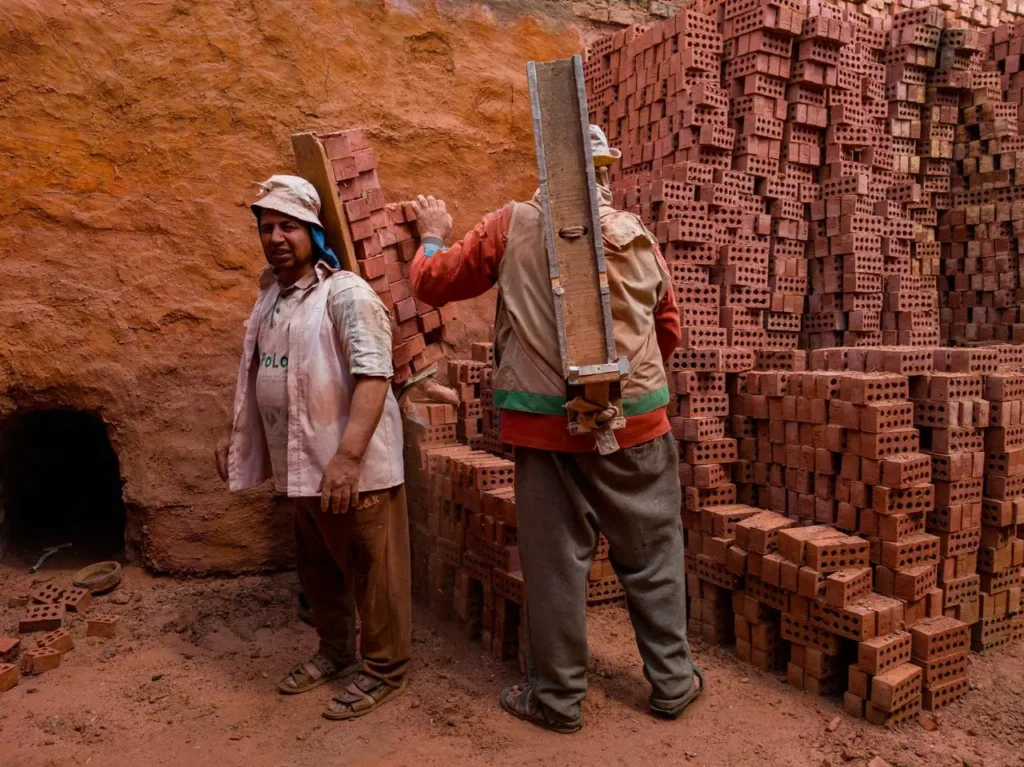
“Bisbee Deportation of 1917” The most controversial event in Bisbee’s history, and one of the most disturbing episodes in American labor history, occurred on July 12, 1917.
In the middle of World War I, as copper prices peaked and labor organising accelerated, Phelps Dodge managers and Cochise County Sheriff Harry Wheeler organised a vigilante posse of some 2,000 armed men who rounded up approximately 1,286 striking miners and deportation sympathisers.
The men, most of them members of or affiliated with the Industrial Workers of the World (IWW), commonly called Wobblies, who had called a strike demanding better wages and safer conditions, were loaded at gunpoint onto cattle cars of the El Paso & Southwestern Railroad.
The train carried them to the New Mexico desert near Hermanas, where they were abandoned without food or water.
No federal charges were ever brought against Phelps Dodge management or Sheriff Wheeler. A federal investigation condemned the deportation as “wholly illegal” but produced no prosecutions.
The event remains a defining episode in American labor history, studied in law schools and labor studies programs for its demonstration of corporate power operating outside legal constraint.
The Bisbee Mining & Historical Museum, housed in the former Phelps Dodge General Office building downtown, has a substantial and carefully curated exhibition on the Deportation that treats the event with appropriate historical seriousness.
The Lavender Pit and the Open-Pit Era (1950s–1970s)
As underground copper ore grades declined in the late 1940s, Phelps Dodge shifted to open-pit mining methods that could process lower-grade ore at larger scale. The result was the Lavender Pit, named not for the color but for Harrison M. Lavender, the Phelps Dodge manager who oversaw its development.
The Lavender Pit consumed an entire neighborhood of Bisbee, including the town of Lowell, which was demolished to make way for the mine. At its maximum extent, the pit measured nearly a mile across and more than 300 feet deep.
An estimated 94 million tons of ore were processed before the pit ceased operations in 1974.
The overlook at the edge of Lavender Pit is now one of the most visited stops in Bisbee. The scale is genuinely staggering, a void in the landscape that was, within living memory, a neighborhood.
The Closure, the Artists, and the Rebirth (1975–Present)
When Phelps Dodge closed all Bisbee operations in 1975, the town faced the same fate that has claimed dozens of American mining communities: rapid depopulation, abandonment, decay.
At the time of closure, about 8,000 people remained. Within a few years, the population had dropped below 5,000 and was still falling.
What saved Bisbee was an accident of cheap rent and Victorian architecture. Artists, counterculture figures, and social refugees from larger cities, drawn by rent at a fraction of Tucson or Phoenix prices and by the extraordinary built environment of a fully intact mining town, began arriving in the late 1970s and early 1980s.
Studios occupied former saloons. Galleries opened in bank buildings. Writers took over miners’ cottages on the staircase streets above Main Street.
The arts community that established itself in Bisbee during this period gave the town its current identity: eccentric, creative, politically progressive, and fiercely independent.
The Bisbee that visitors encounter today, with its gallery scene, farm-to-table restaurants, craft breweries, and annual events like the Bisbee 1000 Stair Climb, is the direct product of this unlikely reinvention.
Bisbee’s population stabilized around 5,000–6,000 by the 1990s and has remained approximately there. The town has achieved a balance between tourism-dependent economy and authentic community character that many similar destinations have failed to maintain.
Experiencing Bisbee’s History Today
The physical record of Bisbee’s history is remarkably complete. Unlike many American cities, Bisbee did not tear down its historic buildings during mid-20th century urban renewal programs, partly because the town was economically depressed and couldn’t afford to, partly because the community that reoccupied it valued the historic fabric.
The Queen Mine Tour takes visitors underground into the actual Copper Queen Mine workings, guided by former miners who worked the operation. The 75-minute experience is the most direct connection to Bisbee’s mining history available to the public.
The gear, the dark, the scale, and the matter-of-fact delivery of the guides, most of whom have personal family histories in the mine, make this the most essential Bisbee experience.
If you want to dive deeper into Bisbee’s fascinating mining heritage, be sure to explore the Queen Mine Tour Bisbee AZ, where you’ll discover the underground world that helped shape this historic Arizona town.
The Bisbee Mining & Historical Museum, affiliated with the Smithsonian Institution, occupies the former Phelps Dodge general office and presents the full arc of Bisbee’s history with high curatorial quality. The Deportation exhibition is particularly strong.
The Copper Queen Hotel still operates as a full-service hotel and is the most atmospheric place to stay in Bisbee. Its documented ghost history, several specific spirits are named and described by long-term staff, gives it an additional layer of character that no chain hotel can replicate.
Beyond its elegant architecture, the Copper Queen Hotel history reveals the fascinating story of Bisbee’s mining boom, historic preservation, and the legends that have made it one of Arizona’s most iconic hotels.
The Bisbee Restoration Museum, a volunteer-operated institution on Main Street, fills in social history gaps with a collection of domestic artifacts, photographs, and personal accounts from long-term Bisbee families.
Frequently Asked Questions About Bisbee Az History
What is Bisbee Az famous for?
Bisbee is historically significant for three main reasons: it was one of the most productive copper mining towns in American history and a cornerstone of Arizona’s territorial economy; it was the site of the 1917 Bisbee Deportation, one of the most extreme examples of corporate-backed labor suppression in U.S. history; and it is a well-documented example of post-industrial community reinvention through arts and culture.
How old is Bisbee Arizona?
The Copper Queen Mine was first worked in 1877, and the town of Bisbee began forming around the mine in the late 1870s. Bisbee was officially incorporated as a city in 1902. It is among the older continuously inhabited communities in Arizona.
Was Bisbee Arizona a ghost town?
Bisbee experienced severe population decline after the mine closure in 1975 but was never fully abandoned. The arrival of artists and alternative community members in the late 1970s stabilized and eventually revitalized the town. It is sometimes described as having been a “near ghost town” during its most depressed period.
What happened during the Bisbee Deportation?
On July 12, 1917, approximately 1,286 striking miners and their supporters, most affiliated with the IWW labor union, were rounded up at gunpoint by a deputized posse organized by Phelps Dodge management and Cochise County Sheriff Harry Wheeler.
They were loaded onto cattle cars and transported to the New Mexico desert, where they were abandoned. The event was widely condemned but produced no criminal prosecutions.
What happened during the Bisbee Deportation?
On July 12, 1917, approximately 1,286 striking miners and their supporters, most affiliated with the IWW labor union, were rounded up at gunpoint by a deputized posse organized by Phelps Dodge management and Cochise County Sheriff Harry Wheeler.
They were loaded onto cattle cars and transported to the New Mexico desert, where they were abandoned. The event was widely condemned but produced no criminal prosecutions.
Can you still visit the Copper Queen Mine?
Yes. The Queen Mine Tour operates daily and takes visitors underground into the actual Copper Queen Mine workings.
Tours depart from the Queen Mine Building on Arizona Street and last approximately 75 minutes. Booking in advance is recommended on weekends and holidays.
Plan Your Visit to Historic Bisbee
Understanding Bisbee’s history makes every element of a visit richer, the Victorian architecture reads differently when you know who built it and why; the Lavender Pit carries different weight when you understand what it replaced; the art galleries on Brewery Gulch make more sense in the context of the community that chose to build them.
Start with the Queen Mine Tour on your first morning. Follow it with the Mining & Historical Museum before lunch. Walk Brewery Gulch in the afternoon. Eat at Café Roka that evening if you’ve booked ahead.
That sequence puts Bisbee‘s history in your hands before you’ve spent a dollar on anything decorative, and it makes everything that follows more meaningful.
→ Ready to plan the full trip? Read the complete Best Things to Do in Bisbee AZ guide or explore Where to Stay in Bisbee AZ to find the right accommodation for your visit.
Last updated: June 2026 | Author Sofia, firsthand travel research across Arizona’s small-town destinations.