
Tombstone, Arizona has a marketing problem that is also, in a backwards way, its greatest asset. Every visitor arrives knowing at least one thing: the gunfight at the OK Corral, October 26, 1881, 30 seconds of violence that produced three dead cowboys and the most documented gunfight in American frontier history.
That singular event, endlessly retold in film, television, and popular history, has given Tombstone a brand recognition that dwarfs the town’s actual size (population around 1,300). It has also, for some travelers, flattened the expectation: you see the reenactment, you take a photo on Allen Street, you leave. Thirty minutes and done.
That version of Tombstone misses almost everything worth seeing.
The Bird Cage Theatre, open continuously from 1881 to 1889 and never renovated, contains 140 years of original evidence of frontier life including bullet holes, graffiti, and brothel cribs that no museum recreation could match.
The Tombstone Courthouse State Historic Park interprets Cochise County history with professional curatorial quality. Boothill Graveyard has 276 graves with epitaphs that tell the social history of a frontier town more honestly than any gunfight reenactment can.
This guide covers 15 things to do in Tombstone AZ that make the case for taking more time in the Town Too Tough to Die.
A Brief History of Tombstone AZ
Ed Schieffelin prospected the San Pedro Valley in 1877 despite warnings from soldiers at nearby Fort Huachuca that all he would find in Apache territory was his tombstone. He named his silver claim the Tombstone in dark humor, and when the strike turned out to be one of the richest silver deposits in Arizona Territory history, the name stuck.
The mining boom brought a population surge of extraordinary speed. By 1881, Tombstone had 10,000 residents, rivaling San Francisco in cultural ambition if not in size.
The town had multiple newspapers (including the Tombstone Epitaph, which still publishes today), six churches, four banks, an ice house, a bowling alley, a school, and a Chinese community. It was also thoroughly lawless in the ways that wealth and distance from authority tend to produce.
The October 26, 1881 gunfight near the OK Corral, between Town Marshal Virgil Earp, his brothers Wyatt and Morgan, and Doc Holliday on one side, and Ike and Billy Clanton and Frank and Tom McLaury on the othe, grew from a long-simmering conflict between the law enforcement faction and the loosely organized cattle-rustling network known as the Cowboys.
The gunfight lasted approximately 30 seconds. Billy Clanton and the McLaury brothers died. The Earps were subsequently tried for murder, acquitted, and then targeted in an assassination campaign that killed Morgan Earp and crippled Virgil.
The silver mines began flooding with groundwater in 1886, pumping equipment was inadequate, and by 1890 the population had collapsed. Tombstone survived as a county seat until 1929, then declined further.
Tourism, beginning in the 1930s, became the economic foundation. Today Tombstone functions primarily as a heritage tourism destination with a small permanent community that has maintained the physical fabric of the 1880s townsite with unusual integrity.
Table of Contents
15 Best Things to Do in Tombstone AZ
1. Bird Cage Theatre, The Most Authentic Frontier Site in America
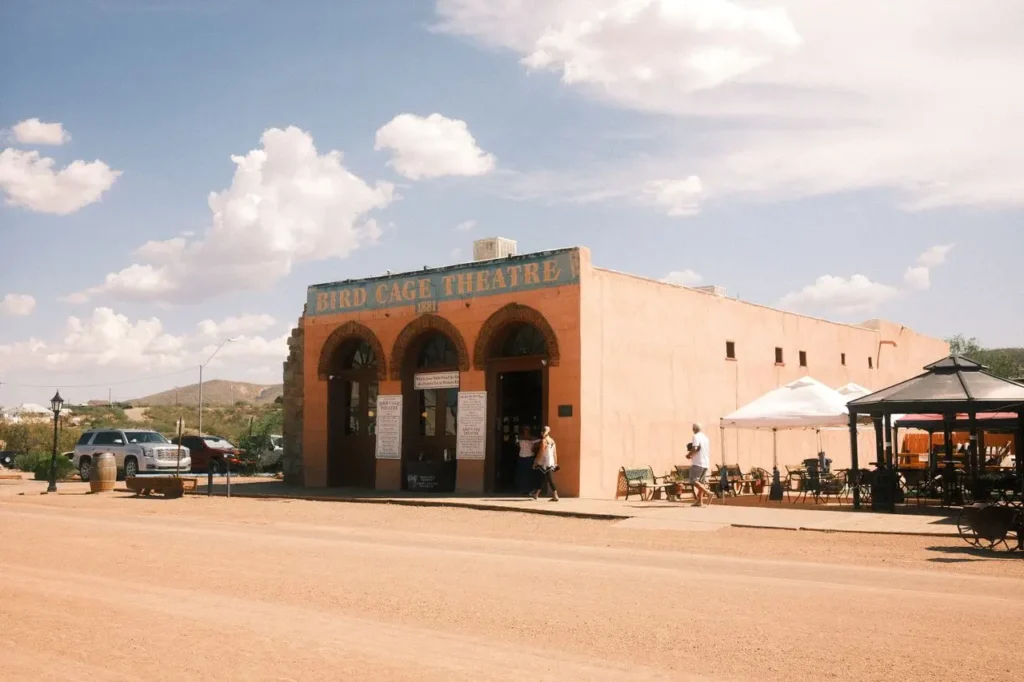
The Bird Cage Theatre is the single most important reason to take Tombstone seriously as a historical destination rather than a tourist performance.
Opened December 26, 1880, and closed in 1889 when the silver mines failed and the population departed, the Bird Cage operated for nine years as a combined saloon, gambling parlor, and brothel, the 14 crib compartments suspended from the ceiling (the “cages” that gave the theatre its name) housed the women who worked upstairs while the main floor operated as an entertainment venue that mixed variety performances with serious gambling.
When the Bird Cage closed in 1889, it was simply locked. No renovation, no restoration, no deliberate preservation, just closure.
When it reopened as a tourist attraction decades later, the interior was exactly as it had been left: bullet holes in the walls (26 documented, each marked), graffiti carved into the wooden surfaces by 1880s gamblers and performers, the original felt on the gambling tables, the original curtains on the stage, the original posters on the walls.
This is not a recreation. It is not a museum exhibit behind glass. It is the actual room where Doc Holliday played poker for eight months straight (a documented marathon game involving $10 million in total wagers by one account), where Lotta Crabtree and Lillie Langtry performed, where the most dramatic episodes of frontier entertainment life in Tombstone took place.
The 45-minute guided tour of the Bird Cage is the single most essential Tombstone experience, and it is dramatically better than the gunfight reenactment for anyone with genuine historical interest.
Hours and admission: Daily tours; check current hours at the Bird Cage Theatre website. Admission approximately $15 adult. Photography is permitted inside, the lighting is low and a phone camera with a good low-light mode is valuable.
2. OK Corral, The Gunfight Site
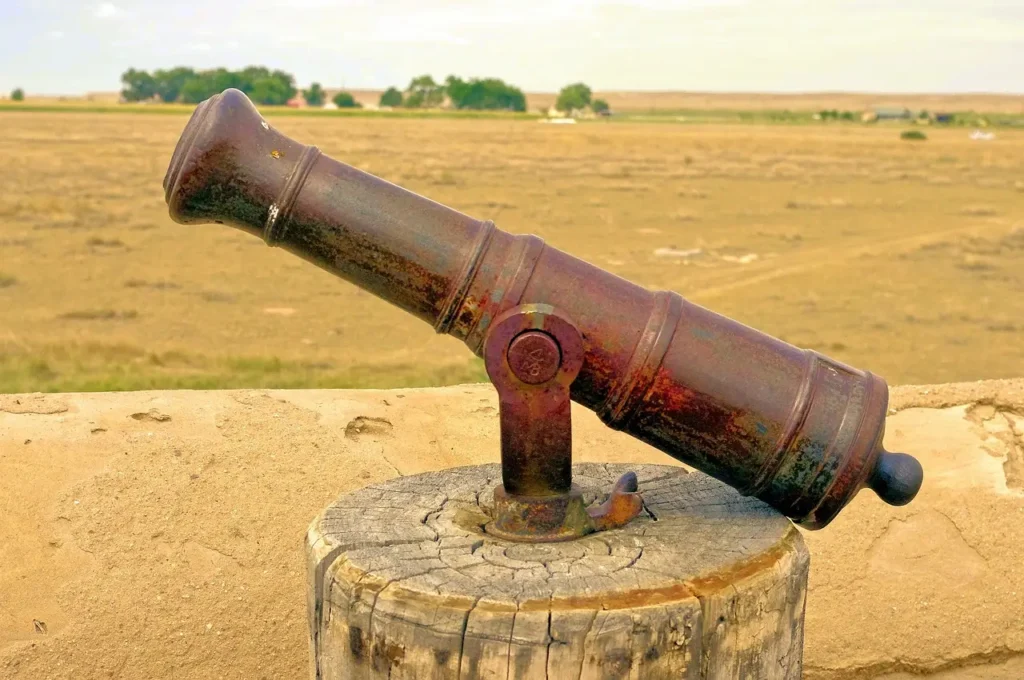
The OK Corral, the actual site of the 1881 gunfight (technically on Fremont Street near the OK Corral’s back entrance, not inside the corral itself), operates as a paid attraction with both the preserved site and regular gunfight reenactments performed by local actors.
The reenactment is genuinely well-produced by the standards of frontier performance history: period costumes, period-appropriate choreography, and a narration that provides the basic historical context.
Whether you want to see the reenactment or not depends on your relationship to living history theater, it’s not trying to deceive anyone into thinking they’re watching the real thing, and its value is as accessible history education rather than as a substitute for the Bird Cage’s authentic materiality.
The preserved site itself, including Wyatt Earp’s studio and the Tombstone Historama presentation, adds interpretive context. Allow 60–90 minutes for the full OK Corral experience.
Tip: The first reenactment of the day is typically less crowded and more enjoyable than the midday performances.
3. Boothill Graveyard
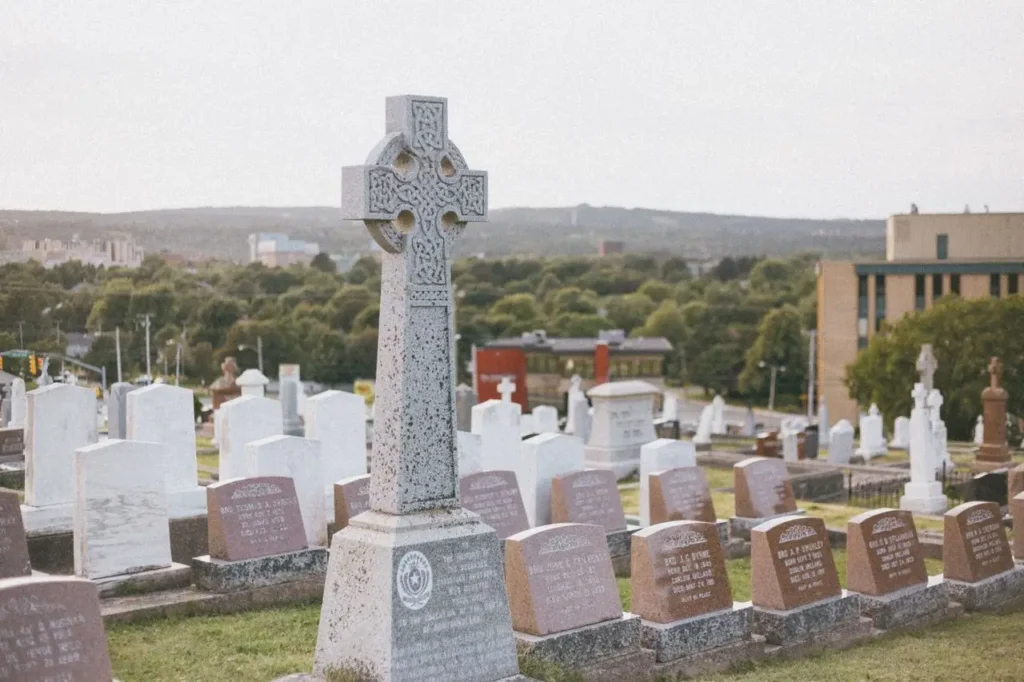
Boothill Graveyard, at the northern edge of town on AZ-80, contains 276 graves from Tombstone’s 1878–1884 peak period, including the graves of Billy Clanton and the McLaury brothers (killed at the OK Corral gunfight), as well as a remarkable cross-section of frontier mortality: mining accidents, gunshot wounds, hanging, typhoid, and the more mundane causes of death in a 19th-century mining camp.
The grave markers and epitaphs are the most valuable part of the Boothill experience. Several are famous (“Here lies Lester Moore / Four slugs from a .44 / No Les, no more”), but the majority are straightforward documentation that collectively paint a social portrait of who Tombstone’s residents were: Irish, Chinese, Mexican, German, English, Black American.
The ethnic diversity of the graveyard population reflects the diversity of the mining camp workforce in ways that Allen Street’s tourist performance rarely acknowledges.
Admission: Free (donations appreciated). The informational booklet sold at the entrance ($5) identifies the significant graves and is worth purchasing.
4. Tombstone Courthouse State Historic Park
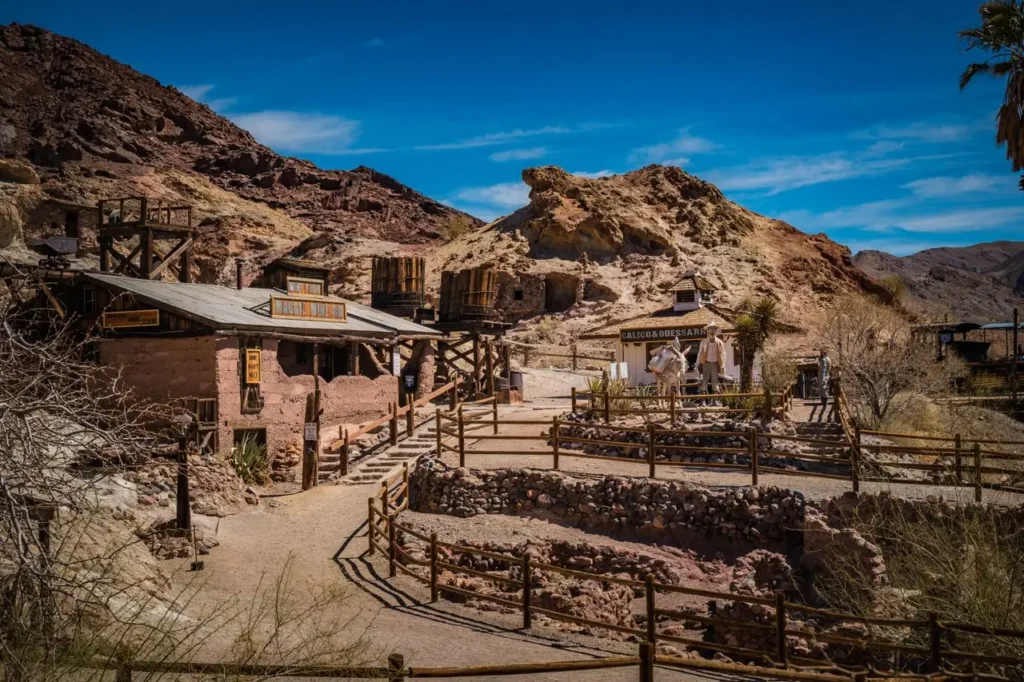
The 1882 Cochise County Courthouse, now operated as Tombstone Courthouse State Historic Park, is among the finest territorial-era public buildings in Arizona and contains a museum that interprets Tombstone’s history with professional quality that the private attractions cannot always match.
The courtroom where the Earps were tried following the OK Corral gunfight has been restored to its 1882 appearance with period furnishings. The gallows in the rear courtyard, used for five documented executions during the territorial period, are intact.
The museum’s artifact collection includes original documents from the Earp trial, period firearms, mining equipment, and personal effects of documented Tombstone residents.
This is the most substantively historical stop in Tombstone, the place where the town’s story is told with the most care and the most intellectual honesty about its complexity.
Hours and admission: Arizona State Parks pass accepted. Check current hours before visiting.
5. Allen Street and the Historic Commercial District
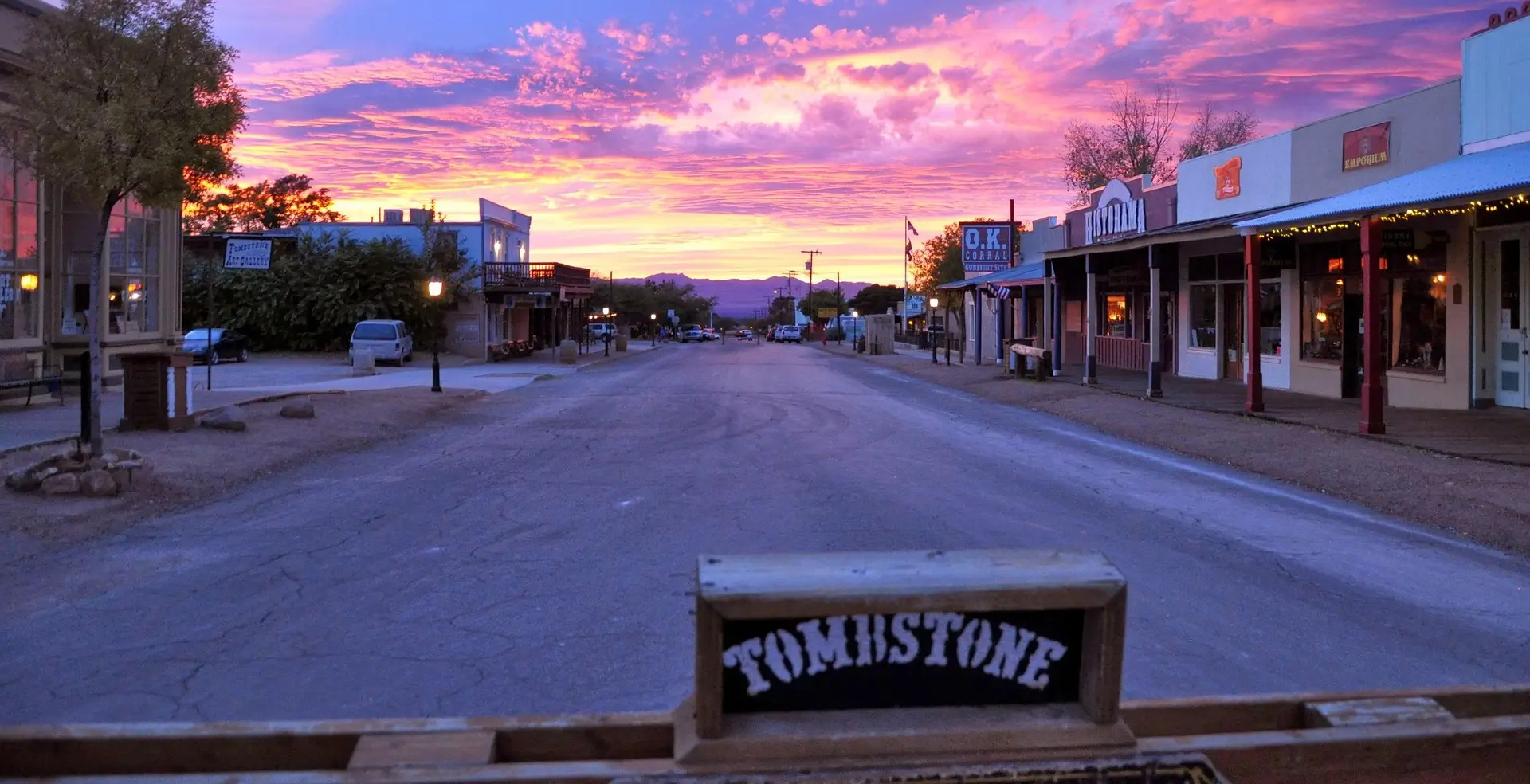
Allen Street, Tombstone’s main commercial thoroughfare, has been preserved and is at approximately 70% original building stock from the 1880s frontier period. The wooden boardwalks, false-front commercial facades, and period-appropriate signage create a streetscape that is the most complete surviving example of an 1880s frontier commercial district in the American Southwest.
Walking Allen Street slowly, ignoring the tourist activity and looking at the buildings themselves, is a free experience of significant historical value. The Crystal Palace Saloon, the Tombstone Epitaph building, and the Can Can Restaurant occupy their original structures.
The Oriental Saloon (where Wyatt Earp held a gambling license) is partially preserved.
Period character note: Allen Street’s costumed cowboys and tourist shops are a layer of theatrical presentation over a genuine historic streetscape. Keep your eyes on the buildings rather than the performers and you’ll see the actual 1880s Tombstone.
6. Crystal Palace Saloon
The Crystal Palace Saloon, at the corner of Allen and Fifth Streets, is Tombstone’s most atmospherically authentic bar, operating in its original 1879 building with a period back bar, tin ceiling, and a social atmosphere that functions as a real bar rather than a tourist attraction with beer. Wyatt Earp and Doc Holliday drank here.
The building was damaged in the 1882 fire that destroyed much of Tombstone and rebuilt immediately.
Stop here for a drink in the afternoon before the evening crowds arrive. The bartenders know their Tombstone history and are reliably informative.
7. Tombstone Epitaph
The Tombstone Epitaph, founded in 1880 by John Clum (Tombstone’s first mayor), is one of the oldest continuously published newspapers in Arizona. The original editor’s boast, “Every Tombstone needs an Epitaph”, became the paper’s identity.
The Epitaph’s contemporary publication is a monthly newspaper focused on Old West history that is sold at shops throughout town. The original Epitaph building on the main street is marked and open for viewing.
The Epitaph’s coverage of the OK Corral gunfight, published the next day in 1881, is the primary source document for the event and is worth reading before or during your Tombstone visit.
8. Rose Tree Museum
The Rose Tree Museum houses something genuinely extraordinary: a single rose bush, planted in 1885 by a homesick English bride who received a cutting from her family in Scotland, that has grown to cover more than 9,000 square feet of ground across the museum’s courtyard.
Documented by the Guinness World Records as the world’s largest rose bush, it blooms in white in mid-to-late April, covering the entire courtyard in a flowering spectacle entirely at odds with the surrounding desert.
Even outside bloom season (mid-October through March), the scale of the rose structure — the trunk has grown to the diameter of a mature tree, with branches extending like a canopy, is remarkable. The small museum inside contains period furnishings and personal artifacts from Tombstone’s frontier period. Admission is minimal.
Best time to visit for the bloom: Mid-to-late April. The exact bloom timing varies by year and is announced on the museum’s social media and website.
9. Tombstone Historama
The Tombstone Historama, adjacent to the OK Corral, is a narrated audiovisual presentation of Tombstone’s history using period photographs, maps, and a diorama of the townsite.
The 26-minute presentation is the most efficient introduction to Tombstone’s full historical context and is particularly useful for visitors with children or those who want background before engaging with the physical sites.
10. Big Nose Kate’s Saloon
Big Nose Kate’s Saloon, named for Doc Holliday’s common-law wife, Mary Katherine Horony, who operated in Tombstone during the frontier period, occupies the original Grand Hotel building (1881) and functions as a combination bar, restaurant, and live entertainment venue.
The building’s underground level, accessible via a staircase from the main bar, was allegedly used for gambling and other activities during the 1880s.
The entertainment at Big Nose Kate’s (live music most evenings, occasional historical presentations) is among the more genuinely fun evening options in Tombstone. The food quality is acceptable; the atmosphere and entertainment are the primary draw.
11. Tombstone Western Heritage Museum
The Western Heritage Museum, in a historic building on Toughnut Street, is a smaller, more personal museum than the Courthouse, a collection assembled by a local historian focused on the specific artifacts and documents of Tombstone’s frontier period.
Less formally curated than the state park museum but richer in personal character and specific artifact stories.
12. Schieffelin Hall
Schieffelin Hall, built in 1881 and named for Tombstone’s founder Ed Schieffelin, is the largest adobe structure in the United States — a claim it has held since its construction.
The building served as Tombstone’s primary entertainment venue, hosting theatrical performances, political rallies, and dances during the frontier period. It’s currently undergoing ongoing restoration efforts and may be viewed from the exterior; check for current interior access status.
13. Day Trip to Kartchner Caverns
Kartchner Caverns State Park, 30 miles north of Tombstone near Benson, is one of the finest cave experiences in the American Southwest — a living cave system discovered in 1974 and kept secret for 14 years to prevent vandalism.
The Rotunda/Throne Room tour takes visitors through passages of extraordinary active speleothem formation. The cave maintains 99% humidity and the delicacy of the formations is immediately visible.
Combining a Tombstone morning with a Kartchner afternoon is one of the better one-day Cochise County itineraries, historically dramatic and geologically extraordinary in sequence.
→ Book Kartchner Caverns tours well in advance at the Arizona State Parks website, the cave strictly limits daily visitor numbers.
14. Day Trip to Bisbee
Bisbee is 25 miles south of Tombstone on AZ-80, 30 minutes. The two towns together cover the history of Cochise County mining and frontier life more completely than either does alone: Tombstone for the silver rush and frontier lawlessness, Bisbee for the copper era and industrial labor history.
Most travelers who do both use Bisbee as their overnight base (better accommodation and restaurants) and visit Tombstone as a morning day trip. The reverse is also workable with a Tombstone overnight, though Bisbee’s accommodation options are stronger.
→ Full guide: Best Things to Do in Bisbee AZ
15. Helldorado Days Festival (October)
Helldorado Days, held annually in late October since 1929, is Tombstone’s main heritage festival, three days of historical reenactments, period costume competitions, a parade down Allen Street, gunfight performance tournaments, and the general commitment to frontier character that defines Tombstone’s community identity.
The event draws serious Western heritage enthusiasts from across the country and produces Tombstone’s most concentrated historical programming of the year.
If you’re visiting Tombstone in October, time it to coincide with Helldorado Days for the fullest version of what Tombstone does best.
Where to Eat in Tombstone AZ
Crystal Palace Saloon, Best bar food in town in the most historically appropriate setting. Burgers, sandwiches, and reliable pub food in a 19th-century saloon. The right choice for lunch on Allen Street.
Big Nose Kate’s Saloon, Larger menu, livelier atmosphere, evening entertainment. Good for dinner if you want the full theatrical Tombstone evening experience.
Longhorn Restaurant, A straightforward diner-style option for breakfast and lunch. Local crowd, reasonable prices, no pretension.
The Lamplight Room (inside the Tombstone Monument Guest Ranch, a few miles outside town), The most refined dining option in the Tombstone area. Worth the short drive for a nicer dinner.
Where to Stay in Tombstone AZ
Tombstone’s accommodation inventory is limited and skews toward budget motels and RV parks on the approaches to town. For better lodging quality, staying in Bisbee (25 miles south) or Sierra Vista (25 miles northwest) and day-tripping to Tombstone is the standard strategy among experienced travelers.
Within Tombstone:
- Tombstone Boarding House, Two adjacent restored 1880 adobe houses operated as B&B accommodations. The most atmospheric in-town option.
- Larian Motel, A clean, basic motel on the main approach road. Reliable budget option.
- Tombstone Monument Guest Ranch, A working ranch property a few miles outside town with the most hotel-grade amenities available near Tombstone.
Better accommodation bases nearby:
- Bisbee (25 miles south), Copper Queen Hotel, Oliver House B&B, multiple vacation rentals. Best overall option.
- Sierra Vista (25 miles northwest), Multiple chain hotels with full amenities. Less character but more comfort.
Getting to Tombstone AZ
Tombstone sits on AZ-80, accessible from:
- Tucson: 70 miles via I-10 East to AZ-80 South (approximately 1 hour)
- Bisbee: 25 miles north on AZ-80 (30 minutes)
- Phoenix: 180 miles via I-10 East and AZ-80 South (approximately 2.5 hours)
There is no public transportation to Tombstone. A private vehicle is required.
When to Visit Tombstone AZ
Best months: October (Helldorado Days, Rose Tree approaching dormancy, comfortable temperatures) and March–April (Rose Tree bloom mid-April, mild weather, pre-summer crowds).
Avoid: July–September midday heat (temperatures 95–100°F+ in the afternoon) and major holiday weekends when Allen Street becomes uncomfortably crowded.
Weekday advantage: Tombstone on a Tuesday morning is dramatically less crowded than Saturday afternoon. The Bird Cage Theatre tour is significantly better when you’re not sharing it with a large group.
How Long to Spend in Tombstone AZ
Half day (3–4 hours): Bird Cage Theatre tour, Allen Street walk, Boothill Graveyard. This covers the essentials.
Full day (6–8 hours): Add the Courthouse State Historic Park, OK Corral reenactment, Rose Tree Museum, lunch at Crystal Palace, and evening at Big Nose Kate’s.
Overnight: Only if you’re deeply interested in Western history or combining with a Kartchner Caverns morning the next day.
Most efficient plan: Arrive by 9 AM, do the Bird Cage first, then the Courthouse, then Allen Street and lunch, then Boothill Graveyard, then drive to Bisbee for the afternoon and overnight. A genuinely excellent day.
Frequently Asked Questions About Tombstone AZ
Is Tombstone AZ worth visiting?
Yes, with appropriate expectations. Tombstone’s historical sites (Bird Cage Theatre, Courthouse, Boothill) are genuinely excellent. The gunfight reenactment is accessible history education. Allen Street’s commercial tourist layer is unavoidable but thin over a real historic streetscape. Give it half a day and you’ll leave satisfied.
What is Tombstone AZ most famous for?
The gunfight at the OK Corral (October 26, 1881) between the Earp brothers and Doc Holliday versus the Clanton-McLaury faction. The event produced the most documented and most mythologized gunfight in American frontier history and has made Tombstone a permanent fixture in Western popular culture.
Is Tombstone AZ safe?
Yes. Tombstone is a thoroughly safe small town for tourists. The “dangerous” reputation is historical, not current.
How far is Tombstone from Tucson?
Tombstone is approximately 70 miles southeast of Tucson via I-10 East to AZ-80 South, about 1 hour drive time. It’s one of the most popular day trips from Tucson in southern Arizona.
Is Tombstone or Bisbee better to visit?
They complement each other rather than compete. Tombstone has better gunfight history and Bird Cage Theatre; Bisbee has better food, better accommodation, better arts scene, and deeper overall experience. Most travelers who have time for both use Bisbee as their base and visit Tombstone as a day trip.
Plan Your Tombstone Visit
The Bird Cage Theatre alone is worth the drive from Tucson. Everything else in Tombstone is a bonus on top of that. Start your visit there, take the full guided tour, and let the physical reality of that 1880s room, the bullet holes, the graffiti, the gamblers’ marks on the table, re-calibrate your understanding of what the American frontier actually was.
The reenactments on Allen Street are entertainment. The Bird Cage is history. Both have their place. Know which you’re looking for.
→ Continue your Cochise County exploration: Best Things to Do in Bisbee AZ | Best Small Towns in Arizona | Hidden Gems in Southern Arizona
Last updated: June 2026 | Author: Emma Watson