
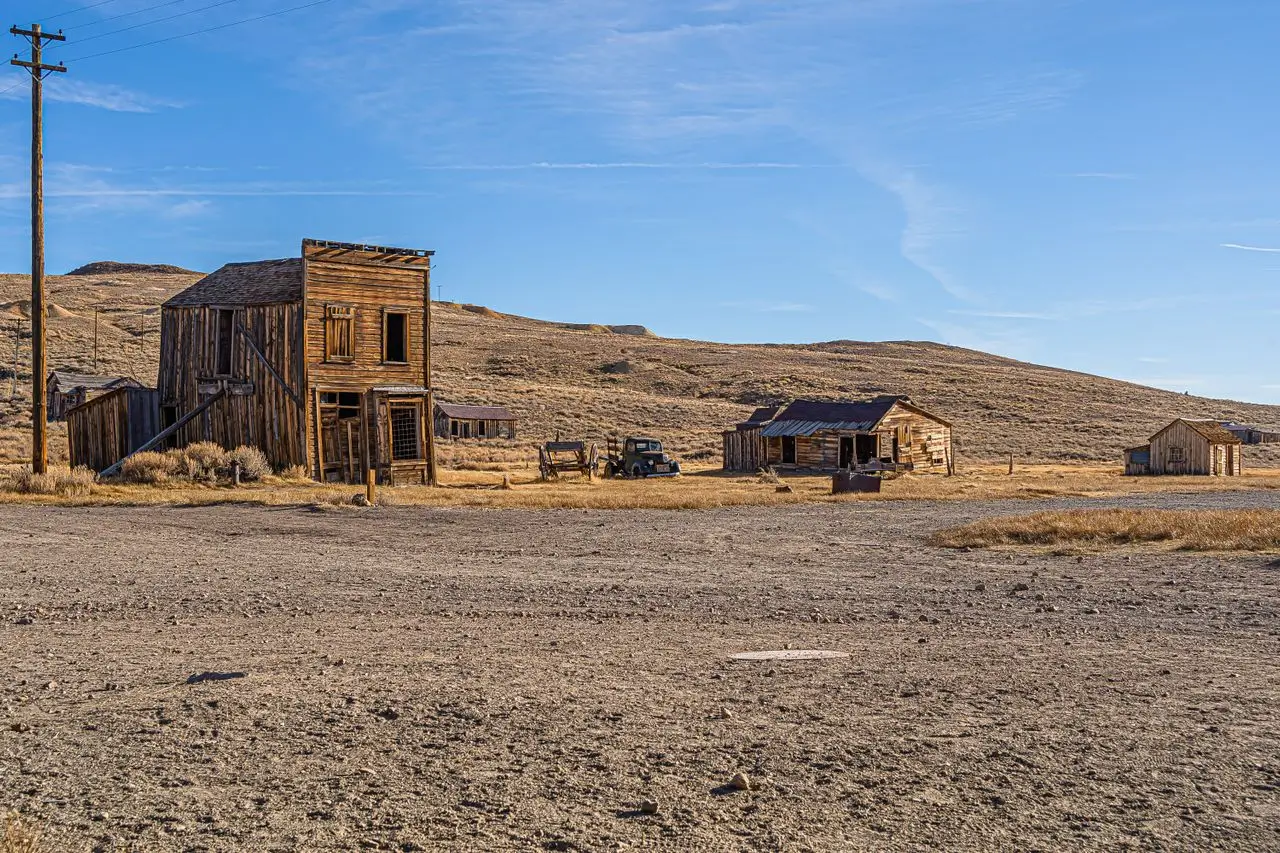
Arizona has more ghost towns per square mile than almost any state in the American West. The combination of mineral wealth, remote terrain, boom-bust mining economics, and a late-19th-century settlement rush created hundreds of communities that flourished briefly and then emptied with almost equal speed when the ore ran out, the railroad bypassed them, or the water supply failed.
What remains ranges from completely intact Victorian commercial districts with 450 living residents (Jerome) to adobe foundations in the desert barely distinguishable from surrounding rock (Courtland).
Between those extremes lies a remarkable variety of preserved, semi-preserved, and genuinely abandoned places that reward the curious traveler willing to leave the interstate.
2026 Important Update: Ruby AZ, previously one of the most recommended ghost towns in Arizona, is currently closed to the public following a closure announced in June 2024.
We have removed Ruby from this guide and replaced it with Fairbank, a BLM-managed historic townsite in the same region that is fully accessible and free to visit. Always verify access status before visiting any remote ghost town site.
This guide covers best Arizona ghost towns road trips, organized by region for logical routing, with everything you need to visit responsibly.
Are There Any Ghost Towns in Arizona?
Yes, and more than most people realize. Arizona has one of the highest concentrations of ghost towns in the United States, a direct result of the massive mineral rush that swept the territory from the 1860s through the early 1900s. Silver strikes produced Tombstone.
Copper made Bisbee and Jerome. Gold built Oatman and Vulture City. When the ore veins ran dry, the water pumps failed, or the railroads changed routes, entire communities emptied within years.
Many of these sites sit on Bureau of Land Management (BLM) land, Coronado National Forest, or Arizona State Parks property and are freely accessible to visitors year-round. Others are on private land with managed day-use access and a small fee. A handful, including Ruby as of 2024, are currently closed entirely.
The short answer: Arizona ghost towns are real, numerous, accessible, and genuinely worth visiting.
How Many Ghost Towns Are in Arizona?
Arizona has an estimated 400+ documented ghost town sites according to historical surveys of abandoned mining and settlement communities. This includes everything from fully preserved townsites with multiple standing structures to bare desert foundations where only a historical marker indicates a community once existed.
Of these, approximately 30–40 ghost towns are regularly visited by travelers and have some level of infrastructure — accessible roads, interpretive signage, or managed facilities. The 10 covered in this guide represent the most worthwhile for road trip visitors in terms of accessibility, preserved character, and historical significance.
Table of Contents
Famous Ghost Towns in Arizona, The 10 Best for a Road Trip
1. Jerome, Arizona’s Most Famous Ghost Town That Refused to Stay Dead
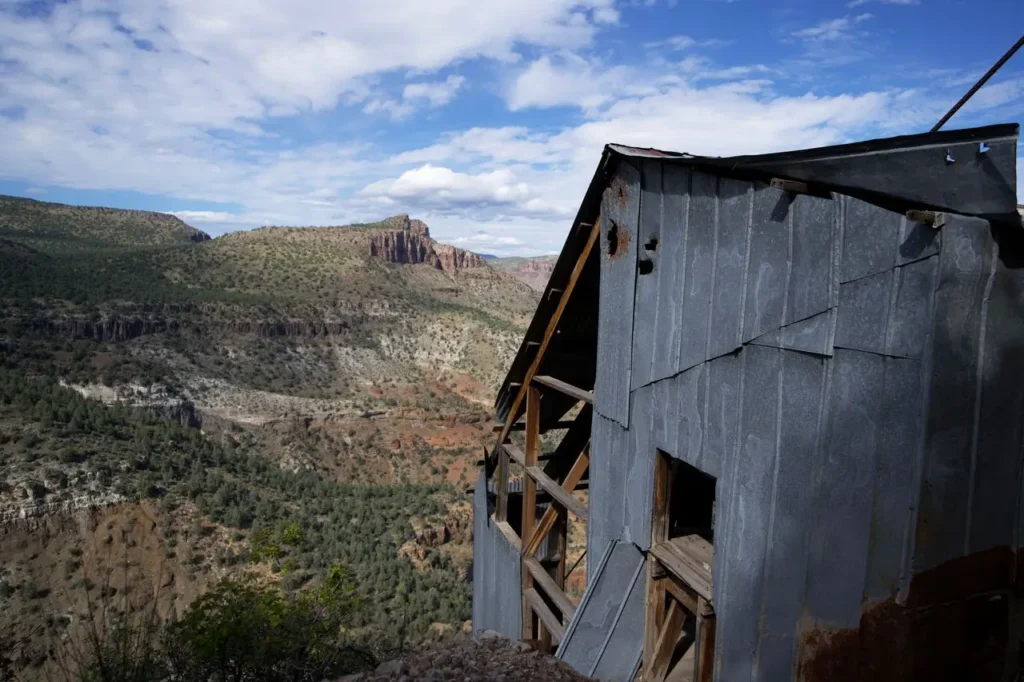
Jerome is the paradox at the top of any Arizona ghost town list, officially designated one of America’s largest ghost towns by population decline, yet home to a thriving community of 450 people, a busy arts district, multiple wine tasting rooms, and some of the finest hotel accommodation in central Arizona.
At its peak, Jerome held 15,000 people and the United Verde Mine was one of the most productive copper operations in the American West. When the mine closed in 1953, the population dropped to 50 within a decade. Buildings began sliding downhill — mine blast damage had weakened the bedrock foundations, and the Sliding Jail, a concrete jailhouse that has migrated 225 feet from its original location, became the most dramatic evidence of this instability.
Artists arrived in the 1960s seeking cheap studio space. By the 1980s, Jerome had stabilized as a genuine arts community. Today it is the best-supported ghost town visit in Arizona, full infrastructure, exceptional hilltop setting above the Verde Valley, and enough documented history to reward serious interest.
What makes Jerome essential: The Jerome State Historic Park inside the former mine manager’s Douglas Mansion, the Audrey Headframe looking 1,900 feet straight down the main mine shaft, and the uninterrupted Verde Valley panorama from almost anywhere in town.
Visitor logistics: Accessible year-round via AZ-89A. Park in the lower lots and walk up. Streets are narrow, large RVs are not recommended on the final approach.
→ Full guide: Best Things to Do in Jerome AZ
2. Oatman, Wild Burros and Route 66 Character
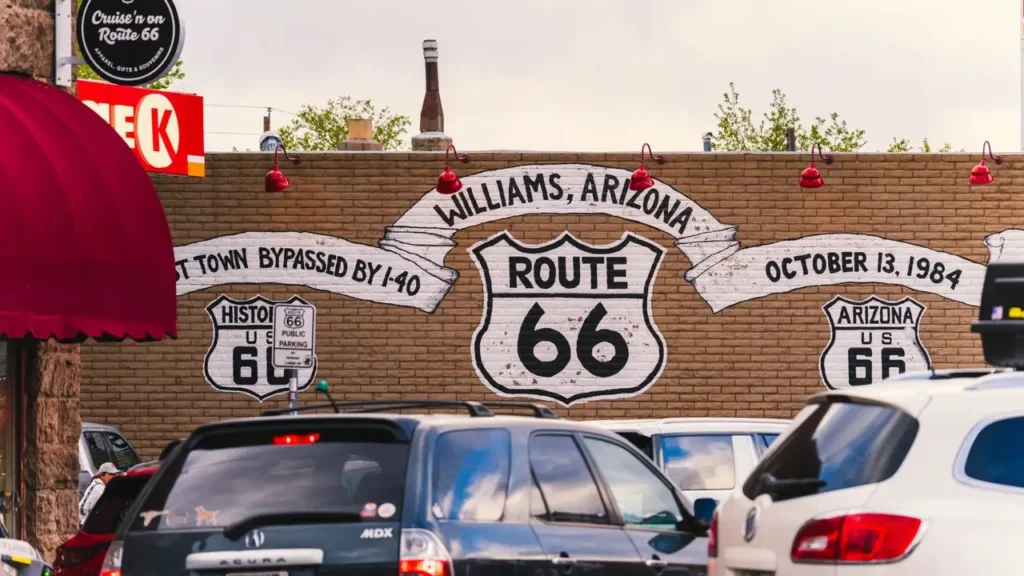
Oatman is the ghost town that forgot to stop performing. A former gold mining camp in the Black Mountains of western Arizona on Historic Route 66, Oatman has a permanent community of feral burros, descendants of prospectors’ pack animals turned loose when the mines closed, that wander the main street freely, stop traffic without concern, and accept carrots from visitors with practiced indifference.
The gold mining peaked in 1915 and declined through the 1920s. When Route 66 was bypassed by Interstate 40 in 1953, the town was nearly abandoned. Route 66 nostalgia and the burros brought it back.
The Oatman Hotel (1902), where Clark Gable and Carole Lombard honeymooned in 1939, still operates as a bar. Weekend gunfight reenactments run on a regular schedule on the wooden boardwalk. The walls inside the hotel are layered with signed dollar bills from decades of visitors, a tradition that has been going since the 1940s.
Visitor logistics: 28 miles south of Kingman via AZ-66. The drive through Sitgreaves Pass is dramatic but narrow, large RVs and trailers should not attempt it. Most visitors stay 2–3 hours. Bring carrots for the burros.
3. Chloride, Arizona’s Oldest Continuously Inhabited Mining Town
Chloride, population around 250, sits in the Cerbat Mountains northwest of Kingman and claims to be Arizona’s oldest continuously inhabited mining town, silver was discovered here in 1864.
It is not precisely a ghost town in the abandoned sense, but it presents as one: a main street of weathered wooden storefronts, an 1890s schoolhouse, the Tennessee Saloon operating as the community anchor, and a population that has kept the town’s character intact through sheer persistence.
The Roy Purcell Murals, large-scale psychedelic paintings on canyon walls outside town, created by the artist in 1975 — are an unexpected highlight and have become a pilgrimage for roadside art enthusiasts. The murals are free, accessible by a short walk from the road, and unlike anything else on the Arizona ghost town circuit.
Visitor logistics: 18 miles north of Kingman on AZ-125. Best visited on a Saturday when the Tennessee Saloon hosts events. Allow 2–3 hours.
4. Vulture City, The Wickenburg Gold Rush
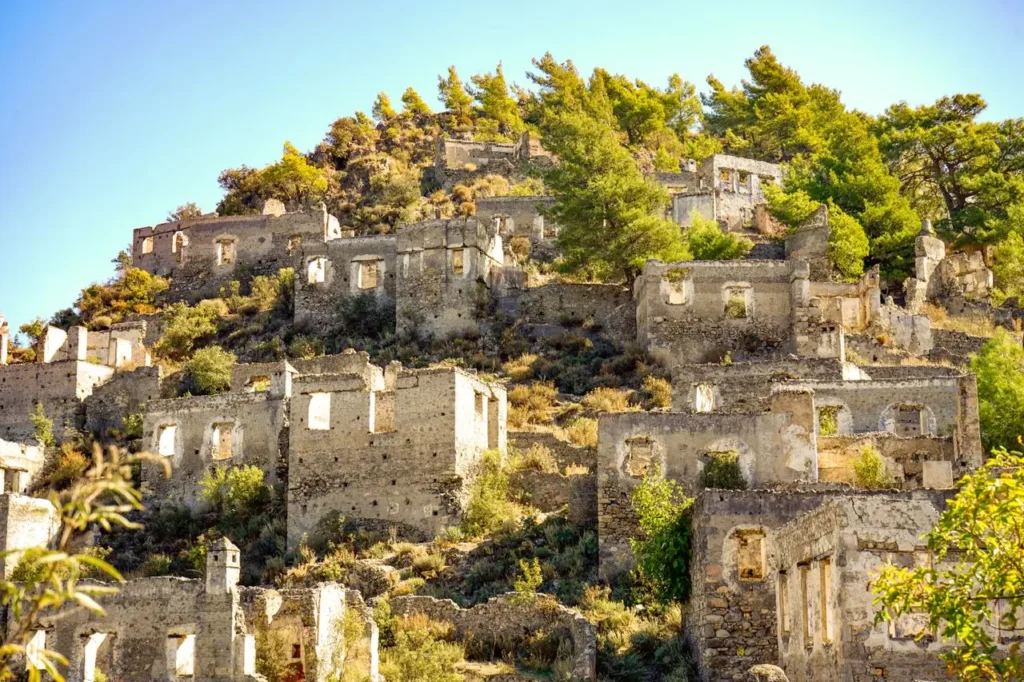
Vulture City, 14 miles southwest of Wickenburg, grew around the Vulture Mine, discovered by Henry Wickenburg in 1863 and one of the richest gold producers in Arizona Territory history. At peak production Vulture City held 5,000 residents and the lawlessness appropriate to a gold rush boomtown operating far from effective authority.
The site is now privately managed as a day-use visitor destination. Preserved structures include the assay office, boardinghouse, machine shop, and the famous hanging tree, a large ironwood from which claim jumpers were allegedly hanged. Guided tours are available and add significant context to what would otherwise be a confusing scatter of historic buildings.
2026 access note: Confirm current operating hours and tour availability before visiting, seasonal closures can affect access. Day-use fee applies.
Visitor logistics: Take Vulture Mine Road from US-60 southwest of Wickenburg. Standard passenger vehicles are fine in dry conditions.
5. Congress and Stanton, Gold Mining Ghosts in the Hassayampa
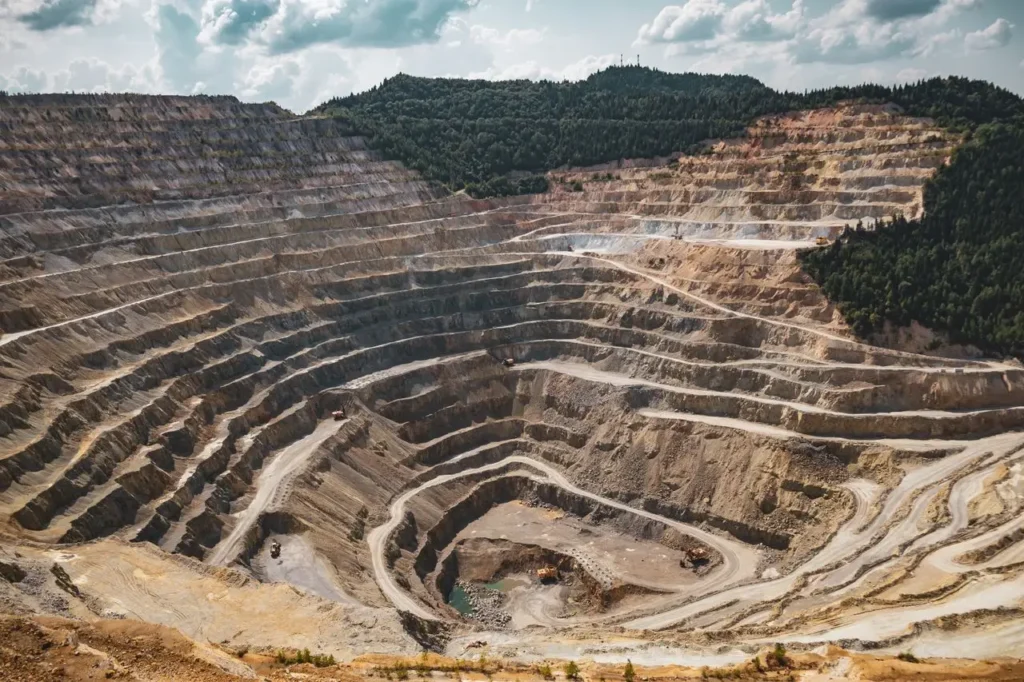
Congress AZ, on US-89 north of Wickenburg, produced $10 million in gold between 1884 and 1938. Today it has a small permanent population, a post office, and scattered historic structures. Worth a stop if you are traveling the Wickenburg to Prescott route.
Stanton, a few miles off US-89 near Congress, is more dramatically abandoned, a townsite now owned by the Lost Dutchman’s Mining Association, which allows prospectors to camp and work old mining claims. Historic buildings are partially preserved and the experience of walking a genuinely deserted townsite with visible mining infrastructure is more atmospheric than Congress proper.
To learn more about the Bisbee mining origin, explore how the town’s early discoveries sparked a copper boom.
Visitor logistics: Take the Stanton exit from US-89, follow the dirt road approximately 3 miles. High-clearance vehicle recommended in wet conditions.
6. Goldfield, The Superstition Mountain Ghost Town
Goldfield, just 4 miles northeast of Apache Junction at the base of the Superstition Mountains, is the most accessible ghost town from the Phoenix metro area and the most family-oriented on this list. The gold mining town boomed briefly in the 1890s and was abandoned by 1926. It has since been restored as a living history attraction with guided mine tours, a narrow-gauge railroad, gold panning demonstrations, and a zip line.
Goldfield leans theatrical rather than purely historical, the restoration makes deliberate entertainment choices, but it is genuinely fun for families and provides a concentrated gold-rush-era experience with no remote driving required.
Visitor logistics: US-60 East from Phoenix to Idaho Road, then north to AZ-88. Free to enter the main street area; fees apply for mine tours and activities. Year-round access.
7. Pearce, Cochise County’s Forgotten Silver Town
Pearce, 75 miles northeast of Bisbee in the Sulphur Springs Valley, was established in 1894 after James Pearce discovered silver on his ranch. The mine closed in 1904. What remains is a scattering of adobe ruins, a partially intact general store building, and a pioneer cemetery with graves dating to the 1890s.
Pearce is a true ghost town in the undeveloped sense, no visitor infrastructure, genuine atmosphere, and the kind of solitude that developed sites cannot replicate. The drive through the Sulphur Springs Valley from Tombstone passes some of the finest open grassland in Arizona.
The surrounding area is excellent for winter birdwatching, sandhill cranes and multiple raptor species concentrate here November through February.
8. Gleeson, Three Ruins for the Price of One
Gleeson, between Tombstone and Pearce, packs remarkable historical density into a small area. The ruins of a hospital with adobe walls still standing to significant height, a concrete and stone jail, and a school are all visible from or near the main road. A pioneer cemetery contains graves from the 1890s through 1920s with epitaphs that tell individual stories worth reading.
A local family maintains a small turquoise shop in the area and is a consistently valuable source of local historical knowledge that no guidebook can fully replicate.
Visitor logistics: Take Gleeson Road from AZ-80 between Tombstone and the Sulphur Springs Valley. Standard passenger cars manage fine in dry conditions.
9. Courtland, Arizona’s Most Atmospheric Ruin
Courtland, 8 miles west of Pearce on a dirt road, is as pure a ghost town experience as is safely accessible in Arizona, a cluster of adobe building walls standing at various heights in open desert grassland, with enough foundation traces to reconstruct the outline of the former townsite in your mind. No visitor infrastructure. No interpretive signs. No fee. Just ruins and sky in every direction.
Visitor logistics: Standard passenger cars can reach Courtland in dry conditions. Do not attempt in wet weather. Bring water and a hat. Tell someone where you are going before you leave.
10. Fairbank, The Best Accessible Ghost Town Near Bisbee
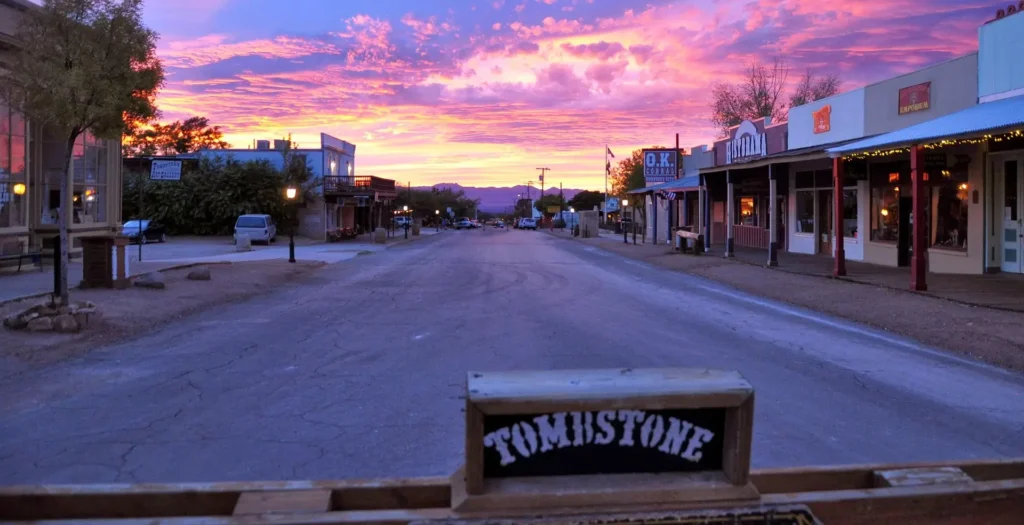
Fairbank, managed by the Bureau of Land Management on the San Pedro River southeast of Tombstone, has replaced Ruby on this list following Ruby’s 2024 public closure. Fairbank was the railroad junction town for Tombstone during the silver boom, the point where ore was loaded onto the Southern Pacific Railroad for smelting elsewhere.
Several substantial historic structures survive including the schoolhouse, a mercantile building, and residential ruins set in the cottonwood corridor along the San Pedro River.
The San Pedro Riparian National Conservation Area surrounding Fairbank is one of the finest riparian birding sites in Arizona — more than 350 bird species recorded, making the site worth visiting for two completely different reasons simultaneously.
Visitor logistics: From Tombstone, take AZ-82 west to Fairbank Road. The site is managed by the BLM, free to visit, and open year-round. The schoolhouse is sometimes open for interior viewing on weekends.
→ For more Cochise County history: Best Things to Do in Tombstone AZ
Arizona Ghost Town Tours, What Are Your Options?
For travelers who prefer guided experiences over self-navigation, several ghost town tour options operate in Arizona:
Organized tours from Phoenix, Several Phoenix-based operators run day trips to Goldfield and Vulture City specifically. These are the most accessible guided options from the metro area. Search “Arizona ghost town tours from Phoenix” for current operators, availability varies seasonally and reviews differ significantly between companies.
Jerome tours, Jerome State Historic Park offers guided tours of the Douglas Mansion and mine history. The Audrey Headframe is self-guided. Multiple local guides offer private walking tours of Jerome’s history by advance booking.
Oatman tours from Las Vegas, Day trip operators from Las Vegas regularly include Oatman on Route 66 itineraries, typically combining it with other historic highway stops along the Nevada-Arizona corridor.
DIY vs. guided, For the southern Arizona ghost towns (Pearce, Gleeson, Courtland, Fairbank), self-guided exploration is the standard approach. These sites have no formal tour infrastructure but are straightforward to navigate with basic preparation and offline maps.
What reviewers consistently say: Goldfield earns strong ratings for family-friendly programming and the mine tour quality. Jerome’s self-guided visit is rated highly by independent travelers who value freedom over structure. Oatman reviews are near-unanimous on one point, the burros are the genuine highlight, not the gunfight reenactments.
Road Trip Routing, How to Connect the Ghost Towns
Northern Route 66 Loop (2–3 days from Phoenix): Phoenix → Wickenburg (Vulture City side trip) → Congress and Stanton → Prescott → Jerome (overnight) → Cottonwood → Flagstaff → Kingman → Chloride → Oatman → return via I-40.
Southern Cochise County Loop (2 days from Bisbee or Tucson): Bisbee or Tucson base → Tombstone → Gleeson → Courtland → Pearce → Fairbank → return. This route covers the most authentic undeveloped ghost town experiences in the state.
Phoenix Day Trip (no overnight required): Phoenix → Goldfield (45 minutes east) → Vulture City near Wickenburg (1 hour northwest) → return. The most accessible ghost town day from the Phoenix metro area without a long drive.
Complete Arizona Ghost Towns Circuit (6–8 days): Phoenix → Vulture City → Congress → Prescott → Jerome (overnight) → Sedona (optional) → Flagstaff → Winslow → Globe → Safford → Clifton → Bisbee (2 nights) → Gleeson → Courtland → Pearce → Fairbank → Tombstone → return to Tucson.
Ghost Town Safety and Ethics
Ghost town structures can be structurally unsound without visible warning. Never enter buildings showing signs of collapse, subsidence, or missing structural support. Abandoned mine shafts are the most serious hazard, frequently unmarked, sometimes invisible until you are standing at the edge. Stay on established paths at mine sites at all times.
Rattlesnakes are present at all southern Arizona ghost towns, particularly in warm months from April through October. Watch where you step and where you place your hands on any surface. Give any snake you encounter space and time to move on its own.
For heat, southern Arizona ghost towns in summer reach temperatures above 100°F. Visit from October through April for the most comfortable experience. Carry at least 3 liters of water per person regardless of season.
On ethics: ghost town artifacts, bottles, tools, hardware, personal effects, are protected by state and federal law on public land. Removing them is a federal offense and deprives every future visitor of the experience you had. Leave the site exactly as you found it.
For remote sites like Courtland, Pearce, and Gleeson, tell someone your itinerary before you leave. Cell service is unreliable in these areas and help is not close.
Frequently Asked Questions
Are there any ghost towns in Arizona?
Yes, Arizona has more than 400 documented ghost town sites, making it one of the highest concentrations in the United States. The mineral wealth of the Arizona Territory created hundreds of mining communities in the late 19th century, most of which were abandoned when ore ran out or economic conditions changed. Jerome, Oatman, Vulture City, and Goldfield are the most visited. Gleeson, Courtland, and Pearce are the most authentically abandoned.
How many ghost towns are in Arizona?
Arizona has approximately 400+ documented ghost town sites according to historical surveys. Of these, roughly 30–40 are regularly visited by travelers and have accessible roads and some level of preserved structures. The majority sit on Bureau of Land Management or National Forest land and are freely accessible to the public.
What is the most famous ghost town in Arizona?
Jerome is the most famous, officially one of America’s largest ghost towns by population decline and the most photographed and written-about abandoned mining town in the state. Tombstone is the most internationally recognized for its frontier history, though it remains an inhabited town. Oatman is the most visited for its Route 66 character and wild burros.
What are the best ghost towns near Phoenix AZ?
Goldfield (4 miles northeast of Apache Junction, 45 minutes from central Phoenix) is the closest accessible ghost town to Phoenix with full visitor infrastructure. Vulture City near Wickenburg (1 hour northwest) is the most historically significant. Congress and Stanton (1.5 hours northwest) are the most authentically abandoned sites within reasonable Phoenix driving distance.
Are Arizona ghost town tours worth it?
For Goldfield and Jerome, guided tours add genuine value, knowledgeable guides provide historical context that self-guided visits miss. For remote southern Arizona sites like Pearce, Gleeson, and Courtland, no formal tour infrastructure exists and self-guided exploration is the standard approach. Tours from Phoenix to Oatman (usually Route 66 day trips) receive generally positive reviews, with the burros cited as the consistent highlight.
Is Ruby AZ ghost town open in 2026?
No. Ruby AZ announced closure to the public in June 2024 and remains closed as of our June 2026 update. Before making any plans to visit Ruby, check the official Ruby AZ website for current access status. Fairbank Historic Townsite (BLM-managed, near Tombstone, free, fully accessible) is the recommended alternative for the southern Arizona ghost town experience.
What should I bring on an Arizona ghost towns road trip?
Water (at least 3 liters per person per day in warm months), a paper map or offline GPS since cell service is unreliable at most ghost town sites, sunscreen and a hat, closed-toe shoes with ankle support for uneven terrain, a flashlight or headlamp for any interior ruins, and a basic first aid kit. If visiting between April and October, schedule outdoor activity for early morning and carry awareness of rattlesnake protocols.
Start Your Arizona Ghost Towns Road Trip
Arizona’s ghost towns are not morbid destinations. They are landscape photographs of American ambition, places where people came from everywhere, worked intensely, built communities, and moved on when the economics changed. The ruins are unexpectedly moving precisely because they were so thoroughly human.
Start with Jerome if you want comfort and full infrastructure. Add Oatman for Route 66 character and the burros. Follow with the Cochise County southern loop, Gleeson, Courtland, Pearce, Fairbank, for the most genuinely abandoned experience the state offers. Build your overnight base in Bisbee for the southern loop and in Prescott or Cottonwood for the northern circuit.
Best Small Towns in Arizona | Best Things to Do in Jerome AZ | Best Things to Do in Tombstone AZ | Hidden Gems in Southern Arizona
Last updated: June 2026 | Author Sofia, 2026 access updates confirmed including Ruby AZ closure status.