


Arizona is not just Grand Canyon postcards and Phoenix sprawl. Tucked between its red-rock mesas, desert grasslands, and mountain sky islands lies a parallel Arizona that most visitors never find, a patchwork of Victorian mining towns, Route 66 relics, artist colonies, wine villages, and ghost-town streets where burros still roam free.
These are the small towns that make Arizona one of the most underrated road-trip states in the country.
Whether you have a single weekend or a full week, each of these destinations offers something the big resorts cannot: genuine character, deep history, and the kind of local experiences that stay with you long after you’ve driven home.
This guide covers the 15 best small towns in Arizona and Arizona Hidden Gems road trip map, organized by what makes each one worth the detour.
Every entry includes what to do, where to eat, when to go, and how to connect it into a road trip. Bookmark it. You’re going to need it.
Why Arizona’s Small Towns Deserve More Attention
Most travelers funnel straight to Sedona, the Grand Canyon, or Scottsdale. That’s understandable, those are remarkable places. But Arizona’s small towns offer something those destinations increasingly cannot: breathing room.
Places like Bisbee, Jerome, and Patagonia receive a fraction of the foot traffic yet deliver a richer sense of place. You can walk into a gallery and talk to the artist.
You can sit at a bar stool and hear a real story about the town’s mining past. You can stand at the edge of a ghost mine and feel the weight of American labor history without a queue in front of you.
Arizona’s small-town geography is also extraordinary diverse. The southern corridor follows the grasslands and sky island mountain ranges of Cochise County, giving it a borderland character unlike anything in the rest of the Southwest.
The central region climbs into the Bradshaw Mountains and Verde Valley, where copper mining turned rough camps into Victorian boomtowns.
The northwest corridor traces historic Route 66, where faded motels and wild burros mark a stretch of American road that still lives.
This is a state worth slowing down in.
Table of Contents
The 15 Best Small Towns in Arizona
1. Bisbee, Arizona’s Coolest Small Town
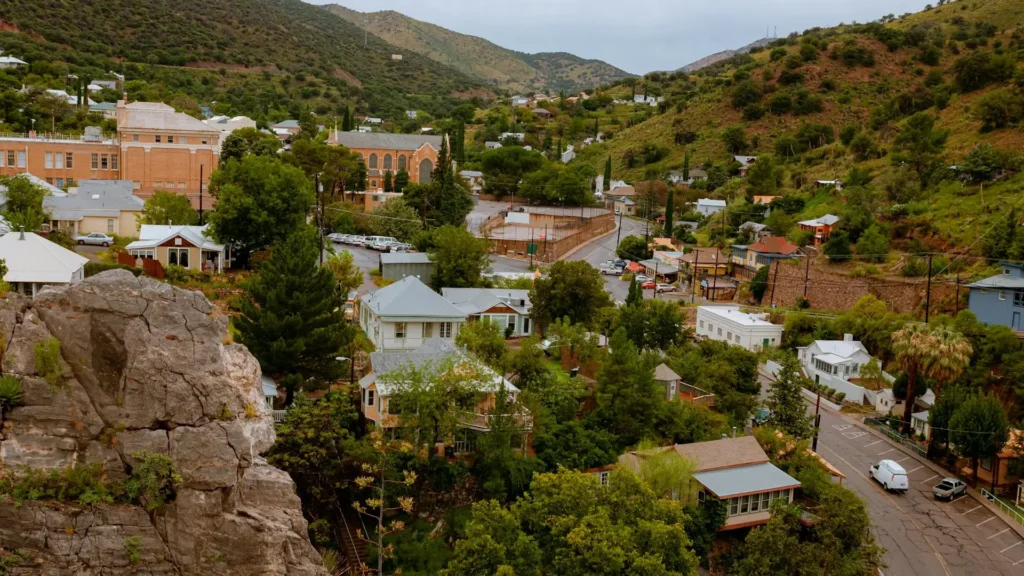
If Arizona has a small-town capital, it is Bisbee. Draped across the steep walls of Tombstone Canyon at 5,300 feet elevation in Cochise County, Bisbee is the kind of place that surprises you into loving it.
What started as a copper mining boomtown in the 1880s, at one point the largest city between San Francisco and El Paso, transformed after the mines closed into one of the Southwest’s most vibrant arts communities.
The architecture alone is worth the drive. Bisbee’s Victorian-era commercial blocks, staircase streets, and painted miners’ cottages cling to canyon walls in a way that feels more like a European hill town than an Arizona desert.
But Bisbee has never tried to be anything other than itself. It’s authentically eccentric: a parade of galleries, live music venues, vintage shops, and some of the best independently owned restaurants in southern Arizona.
What to do in Bisbee: The Queen Mine Tour is the obvious anchor, a 75-minute underground journey into the copper mine that made Bisbee famous, complete with hard hats, headlamps, and a mine cart ride that children and adults both love.
Book in advance because it sells out. The Old Bisbee Ghost Tour is equally worthwhile for a completely different reason: Bisbee has a documented haunted history centered on the historic Copper Queen Hotel and the Oliver House, and the evening walking tour is genuinely unsettling.
For those who prefer daylight exploration, the Lavender Pit Overlook offers a jaw-dropping view of the open-pit mine that replaced underground operations in the 1950s, a 300-foot-deep crater that permanently reshaped a hillside.
Then walk Brewery Gulch, the historically rowdy main entertainment strip that once hosted 47 saloons and has reinvented itself as a strip of craft breweries, cocktail bars, and gallery spaces.
Where to eat: Café Roka (fine dining in the historic district, open Thursday–Saturday, reservations strongly recommended), Santiago’s Mexican Grill (legendary green chile, locals-only level of loyalty), the Screaming Banshee Pizza (beloved neighborhood pizza on the lower canyon road).
When to go: Bisbee is good year-round. Spring and fall are ideal for temperatures between 60–80°F. The Bisbee 1000 Stair Climb Race in October and Day of the Dead celebrations in early November are particularly special.
How far from Phoenix: Approximately 3.5 hours via I-10 East. Perfect as a two-night weekend trip. It’s also 90 minutes from Tucson, making it one of the best day trips from Tucson in southern Arizona.
If Bisbee catches your interest, explore our complete guide to the best things to do in Bisbee AZ, including historic landmarks, scenic viewpoints, and hidden gems.
2. Jerome, Arizona’s Largest Ghost Town That Refuses to Stay Dead

Jerome sits on Cleopatra Hill at 5,000 feet elevation in the Verde Valley, a near-vertical mining town that once held 15,000 residents and is now home to around 450.
It is officially designated one of America’s largest ghost towns, though calling Jerome a ghost town today feels like an insult to its very alive arts scene, restaurant row, and wine bars.
What makes Jerome genuinely fascinating is how it nearly fell apart, literally. After the copper mines closed in the 1950s, the town’s population dropped to 50.
Buildings began sliding down the hillside due to mine blast damage to the foundations. The sliding jail, which has moved 225 feet from its original location, is now a tourist attraction. Artists arrived in the 1960s seeking cheap studio space and never really left.
What to do in Jerome: The Jerome State Historic Park houses an exceptional mining museum inside the former mansion of James Douglas Jr., the mine owner. The Audrey Headframe Park lets you look directly down the 1,900-foot-deep mine shaft. For more ideas and must-visit spots in the area, check out our guide on Best Things to Do in Jerome AZ.
Spend time browsing the galleries along Main Street, many are working studios rather than mere gift shops, and prices are far lower than Sedona.
Jerome’s wine scene has emerged as a surprise draw. The town sits within the Verde Valley Wine Trail, and several tasting rooms cluster within walking distance, offering Arizona wines that compare respectably with their California counterparts.
When to go: Jerome is a year-round destination but can be very busy on weekends. A weekday visit in spring or fall gives you the town at its best.
Road trip pairing: Jerome pairs perfectly with nearby Prescott (30 minutes south) and Cottonwood’s Verde Valley Wine Trail. It also sits on the natural route between Phoenix and Sedona.
3. Tombstone, The Town Too Tough to Die
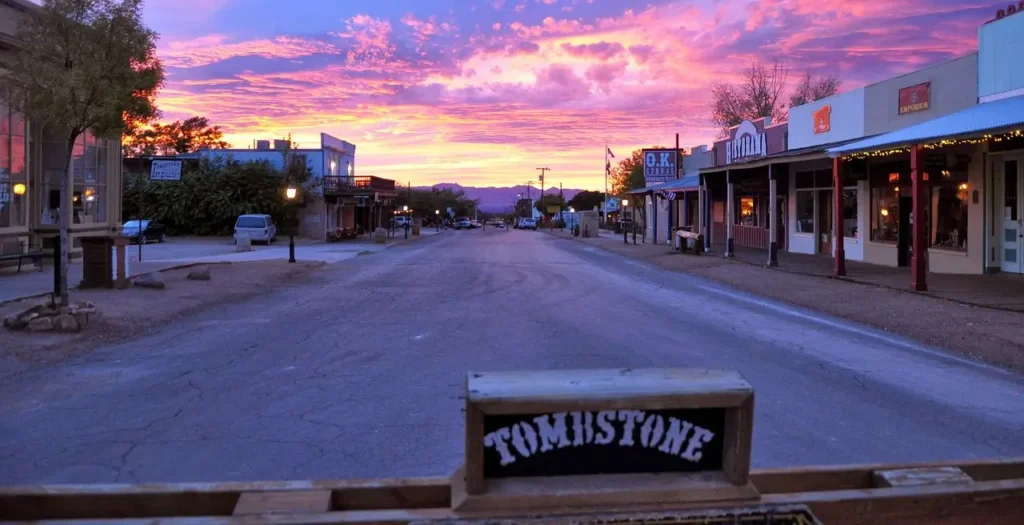
Tombstone earns its place on this list not despite being famous but because the real town behind the legend is far more complex and interesting than the gunfight-at-the-OK-Corral caricature suggests.
History lovers will find plenty to explore in Tombstone. If you’re planning a visit, check out our Best Things to Do in Tombstone AZ guide for the top attractions, historic sites, and Wild West experiences.
Yes, the historical reenactments happen daily. Yes, there are cowboys in period costume on Allen Street. But beneath the performance, Tombstone is a legitimate piece of American history.
This was the site of one of the largest silver strikes in American frontier history. At its peak in the early 1880s, Tombstone’s population rivaled San Francisco’s.
The Birdcage Theatre, open without interruption from 1881 to 1889, saw some of the most dramatic episodes of frontier life in documented American history. The Crystal Palace Saloon still operates in its original building.
The Bird Cage Theatre is the genuine highlight for serious history travelers. The bullet holes are real. The original brothel cribs are real. The poker table where a documented eight-month poker game took place is real. Go on a weekday when the tour is unhurried.
When to go: October through April is ideal. Summers in Tombstone are hot and tourist-heavy. The Helldorado Days festival in October is among the better heritage festivals in the state.
Road trip pairing: Tombstone is 25 miles from Bisbee, they belong on the same weekend trip. Add Kartchner Caverns State Park (30 miles north) for a completely different kind of underground experience.
4. Patagonia, Arizona’s Quiet Wine and Wildlife Town
Most people drive through Patagonia on the way somewhere else and regret it later when they learn what they missed.
This tiny grassland town of about 900 people in the Santa Cruz Valley sits at the intersection of serious birding territory, small-scale Arizona wine country, and the kind of old-fashioned Main Street that is vanishing elsewhere.
Patagonia Lake State Park draws campers and water sports fans to a desert reservoir that feels out of place in the best possible way.
The Patagonia-Sonoita Creek Preserve is one of the most important riparian birding sites in North America, more than 275 bird species have been recorded here, and the cottonwood gallery forest along Sonoita Creek is a genuine ecological wonder.
The small downtown has an organic grocery, a coffee shop with serious espresso, two wine tasting rooms, and a general store that’s been operating since the 1880s. That’s all you need.
When to go: Spring migration season (April–May) is peak birding. Fall harvest season (September–October) for the wineries. The town is small enough that even peak season feels quiet.
If Patagonia is on your itinerary, don’t miss our complete guide to the Things to Do in Patagonia AZ before you go.
5. Tubac, Arizona’s Oldest European Settlement
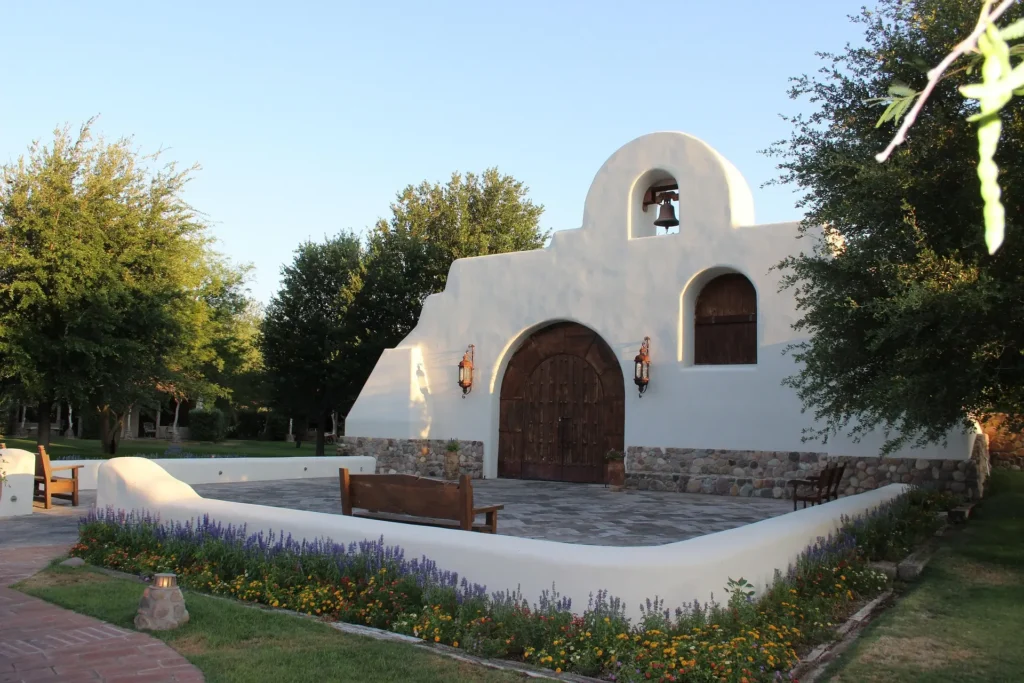
Founded in 1752 as a Spanish colonial presidio, Tubac holds the distinction of being Arizona’s first European settlement, predating Tucson by more than 20 years.
Today it operates as a large artists’ colony where more than 100 galleries, studios, and artisan shops occupy the historic village.
Tubac is not a gimmick. The quality of work here is genuinely high, and the diversity of media, ceramics, sculpture, bronze casting, weaving, photography, painting, is wider than in most dedicated arts destinations.
The Tubac Presidio State Historic Park is an excellent 45-minute museum experience that contextualizes the town’s colonial and territorial history.
The Anza Trail runs through Tubac, tracing the route of the 1775–76 Juan Bautista de Anza expedition that pioneered the overland route from Sonora to San Francisco. Sections of the trail are hikeable and give the area genuine outdoor depth beyond gallery hopping.
When to go: Winter and spring are prime, Tubac’s Festival of the Arts in February is one of the premier outdoor art markets in the Southwest.
Will Tubac be part of your Arizona adventure? If so, check out our Things to Do in Tubac AZ guide for everything you need to plan an unforgettable visit.
6. Sonoita, Arizona Wine Country’s Best-Kept Secret
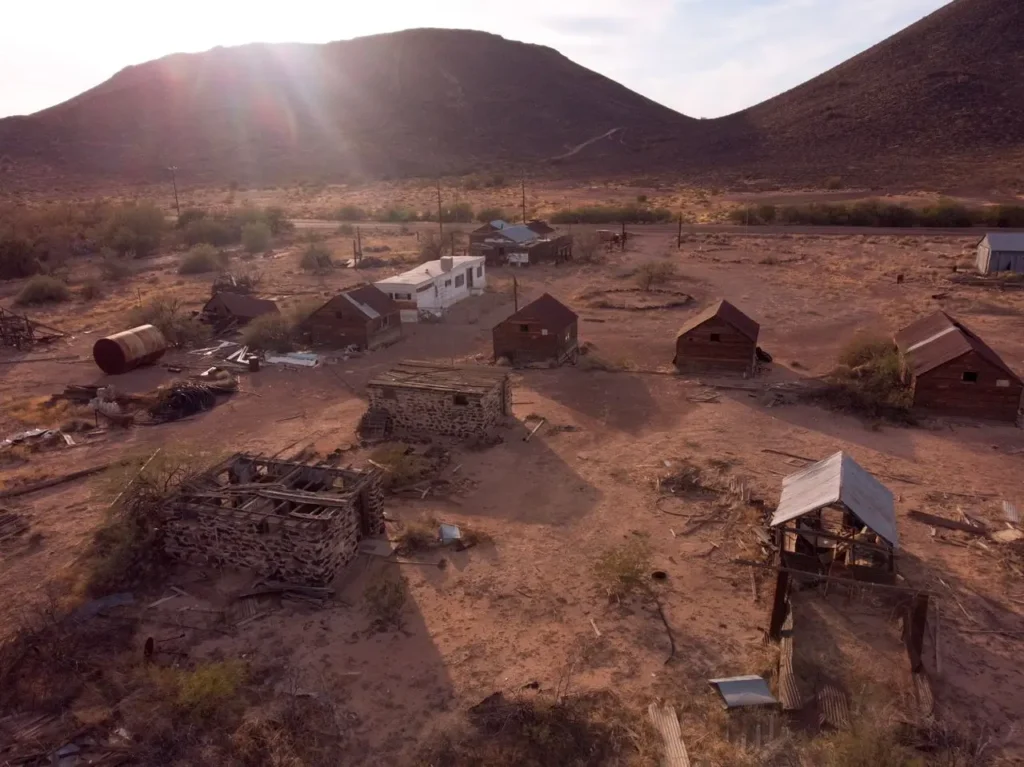
Sonoita and its neighboring village of Elgin form the core of Arizona’s most established wine-producing region, the Sonoita AVA (American Viticultural Area).
At 5,000 feet elevation in rolling grassland wine country, this area produces notably different wines than anyone expects from Arizona — structured reds and crisp whites that reflect the altitude and diurnal temperature swings.
There are around 20 wineries within a short drive of Sonoita’s single traffic light. Most offer tasting room experiences that feel genuinely personal because the winemakers are often pouring the wine themselves.
Dos Cabezas WineWorks, Callaghan Vineyards, and Lightning Ridge Cellars are consistently cited as standouts by serious wine travelers.
For non-wine travelers, the Sonoita grasslands offer exceptional wildlife viewing, pronghorn antelope are common sightings in the surrounding rangelands, and the area sits within migration corridors for numerous raptor species.
Road trip pairing: Sonoita is 35 miles from Bisbee and 45 miles from Tubac, making it the natural centerpiece of a southern Arizona small towns wine loop.
7. Oatman, The Route 66 Town Where Wild Burros Rule
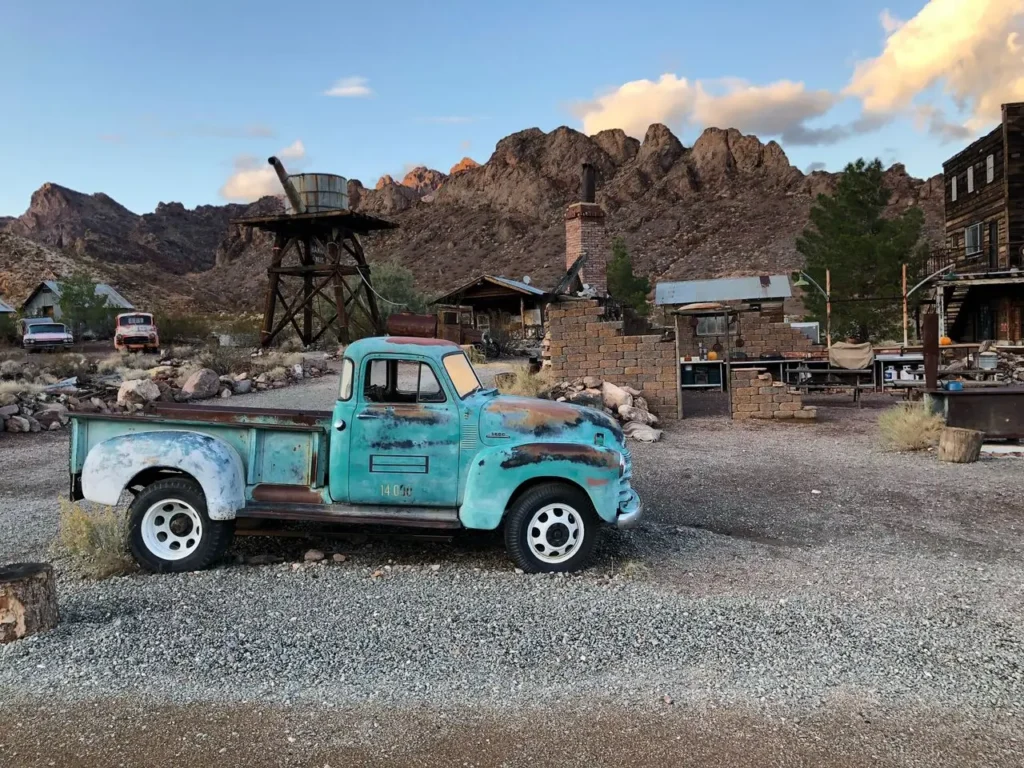
Oatman exists in a category by itself. This former gold mining camp on Historic Route 66 in the Black Mountains of western Arizona is home to a permanent herd of feral burros, descendants of prospectors’ pack animals turned loose when the mines closed, that wander the main street freely, stop traffic regularly, and accept carrots from visitors with practiced indifference.
The town leans into its Wild West identity with gunfight reenactments on the main street on weekends and a general aesthetic of cheerfully preserved 1920s Route 66 Americana.
The Oatman Hotel, where Clark Gable and Carole Lombard honeymooned in 1939, still operates as a bar and historic property. The walls are covered in thousands of dollar bills signed by previous visitors, a tradition that has been going on for decades.
Oatman is best as a half-day stop on a Route 66 road trip between Kingman and Needles. The drive itself through Sitgreaves Pass is dramatic desert mountain scenery.
8. Williams, The Gateway That’s Better Than a Gateway
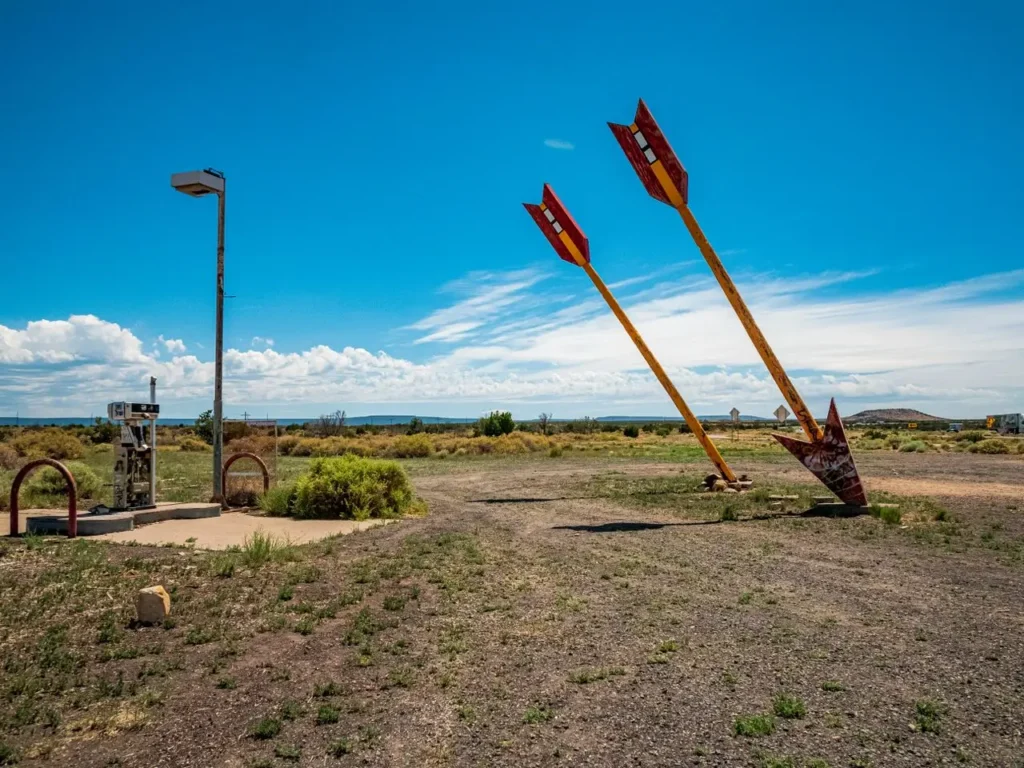
Williams markets itself as the Gateway to the Grand Canyon, it sits on Route 66, and the Grand Canyon Railway departs from its historic depot daily. But Williams is a better destination than its gateway status suggests.
The historic Route 66 commercial strip is one of the most intact in the state, the downtown has genuine good restaurants and bars rather than tourist traps, and the surrounding Kaibab National Forest offers pine forest hiking and cross-country skiing that contrasts sharply with the desert towns to the south.
The Grand Canyon Railway is legitimately one of the most enjoyable experiences in northern Arizona, a 2.25-hour vintage train journey through ponderosa pine forest and open range, with on-board entertainment, that arrives at the South Rim in style. Worth doing if the logistics fit.
When to go: Williams works year-round. The Holiday Extravaganza in winter, when the town lights up with Christmas displays and polar express-style train experiences, is among the more family-friendly events in the state.
9. Wickenburg, Arizona’s Dude Ranch Capital
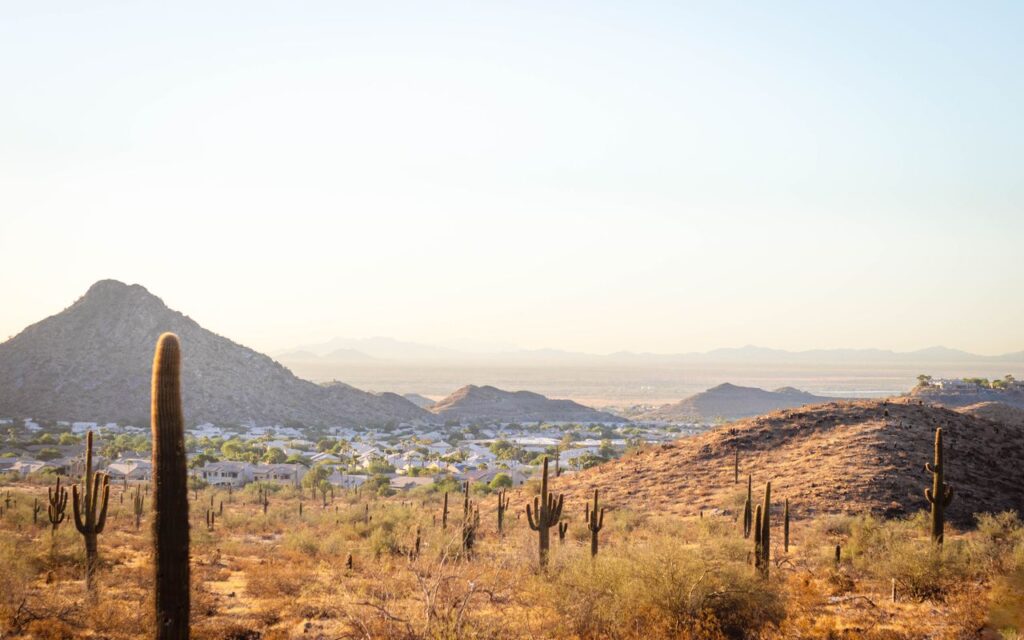
Wickenburg sits at the confluence of the Hassayampa River and the Vulture Mountains, 60 miles northwest of Phoenix, close enough to be a day trip, interesting enough to deserve longer.
Once one of the most significant gold mining towns in the Arizona Territory, Wickenburg now trades on a different version of its Western heritage: genuine dude ranch culture.
The Desert Caballeros Western Museum is unexpectedly excellent, a serious institution with a strong permanent collection of Western American art, Native American artifacts, and frontier period rooms. The museum alone justifies a detour for anyone with an interest in the American West beyond gunfighter mythology.
The Jail Tree, a large mesquite tree to which prisoners were reportedly chained when the town had no jail, still stands on Tegner Street. The story may be partly legend, but the tree is real and the sign is entertaining.
Road trip pairing: Wickenburg sits on the natural route between Phoenix and Prescott, making it an easy add-on to a central Arizona loop.
10. Prescott, Victorian Arizona at Its Most Complete
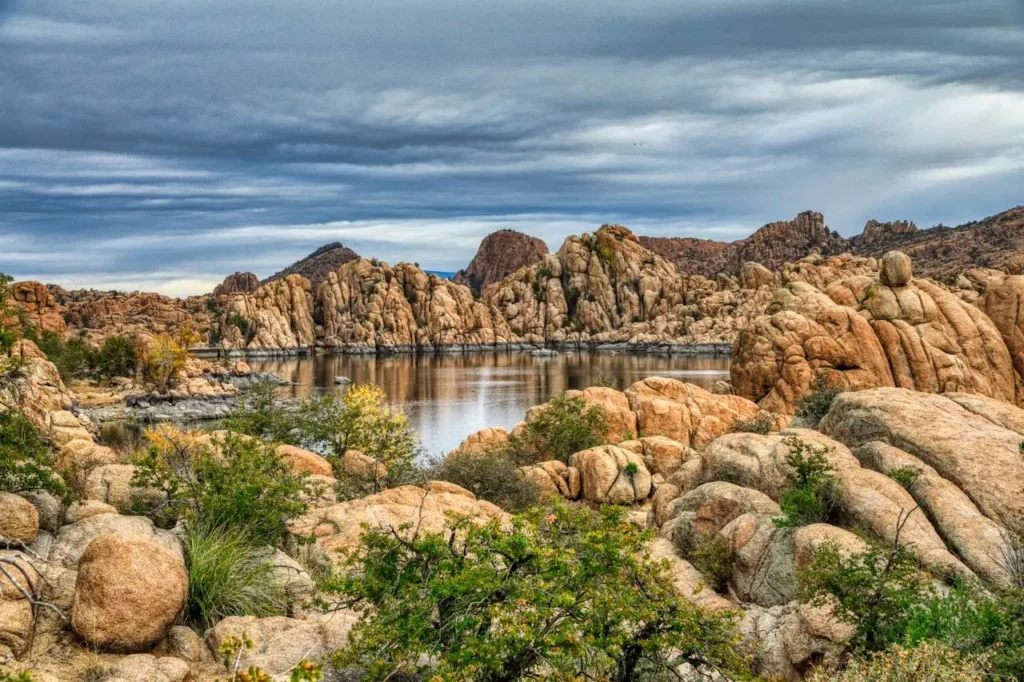
Prescott is technically a city rather than a small town (population around 46,000), but its downtown Whiskey Row and surrounding Victorian neighborhoods function at a small-town scale that earns it a place on this list.
Courthouse Plaza, a genuine historic town square, anchors a walkable downtown of saloons, breweries, galleries, and locally owned restaurants that feels genuinely lived-in rather than manufactured.
The Sharlot Hall Museum complex is one of the best regional history museums in Arizona, occupying the original territorial governor’s mansion and surrounding historic structures.
The Prescott National Forest begins within minutes of downtown, offering a forest hiking and trail running network that draws outdoor enthusiasts from Phoenix.
When to go: Prescott’s mile-high elevation (5,368 feet) means pleasant summers when Phoenix swelters. The Bluegrass Festival in late June is a major draw. October brings the fall color to the surrounding forest.
11. Globe, Arizona’s Most Underrated Mining Town
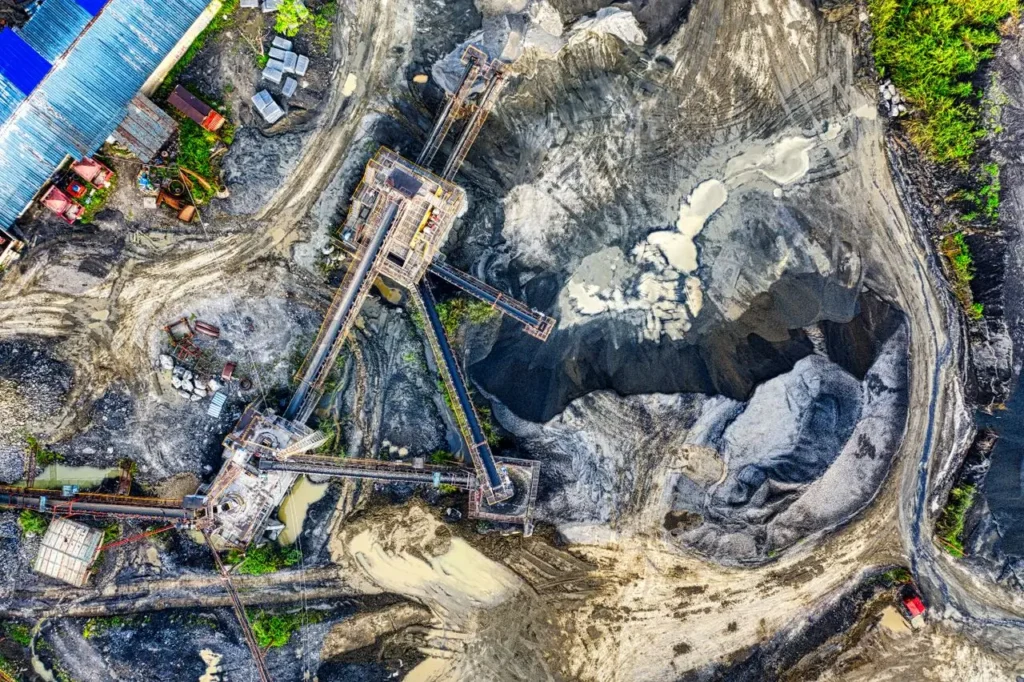
Globe sits in the Pinal Mountains at the junction of US-60 and AZ-88, and it is one of the most underrated historic towns in the state.
The downtown has a dense concentration of Art Deco commercial architecture from the 1920s–30s that is virtually unaltered, an outdoor museum of period commercial building that gets very few visitors.
The Besh-Ba-Gowah Archaeological Park, a short drive from downtown, protects a Salado culture site occupied from approximately 1225–1450 CE.
The small museum is excellent and the ruins site itself is emotionally affecting in the way that significant ancestral sites always are. This is not a well-known attraction. That is a failure of marketing, not of quality.
The Salt River Canyon, sometimes called Arizona’s Little Grand Canyon, is accessible from Globe on US-60 toward Show Low and is one of the most visually striking drives in the state.
12. Winslow, Standing on a Corner in the Spotlight
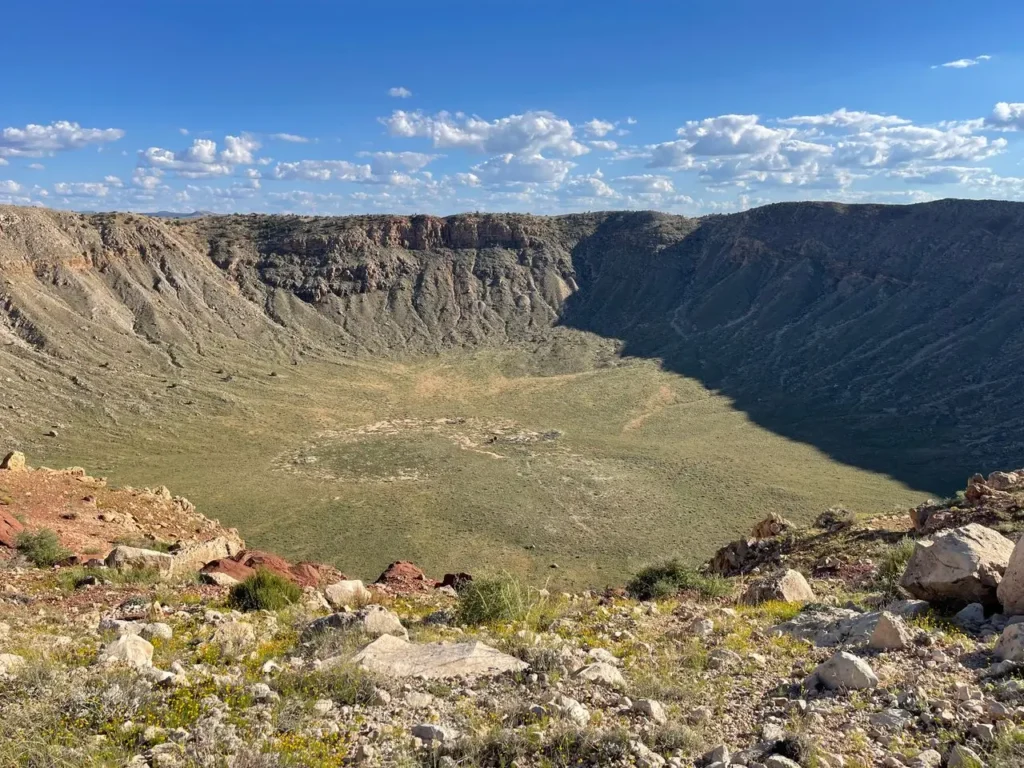
Winslow achieved an unlikely form of immortality via the 1972 Eagles song “Take It Easy,” which references standing on a corner in Winslow, Arizona.
The town has leaned into this with good humor and effective tourism infrastructure: the Standin’ on the Corner Park on Route 66 draws a steady stream of visitors who want a photo with the bronze statue and the girl-in-a-flatbed-Ford mural.
But Winslow has genuine history beyond the song. La Posada Hotel, designed by architect Mary Colter for the Fred Harvey Company in 1929 and extensively restored starting in 1997, is one of the finest historic hotels in the American Southwest.
The Turquoise Room restaurant inside La Posada is James Beard-recognized and serves a menu built around regional ingredients and Native American culinary traditions. Staying at or eating at La Posada is the real reason to go to Winslow.
Meteor Crater, the best-preserved meteorite impact site on Earth at 4,000 feet wide and 550 feet deep, is 35 miles west of Winslow on I-40. The combination makes for a very full day.
13. Ajo, Arizona’s Most Surprising Desert Town
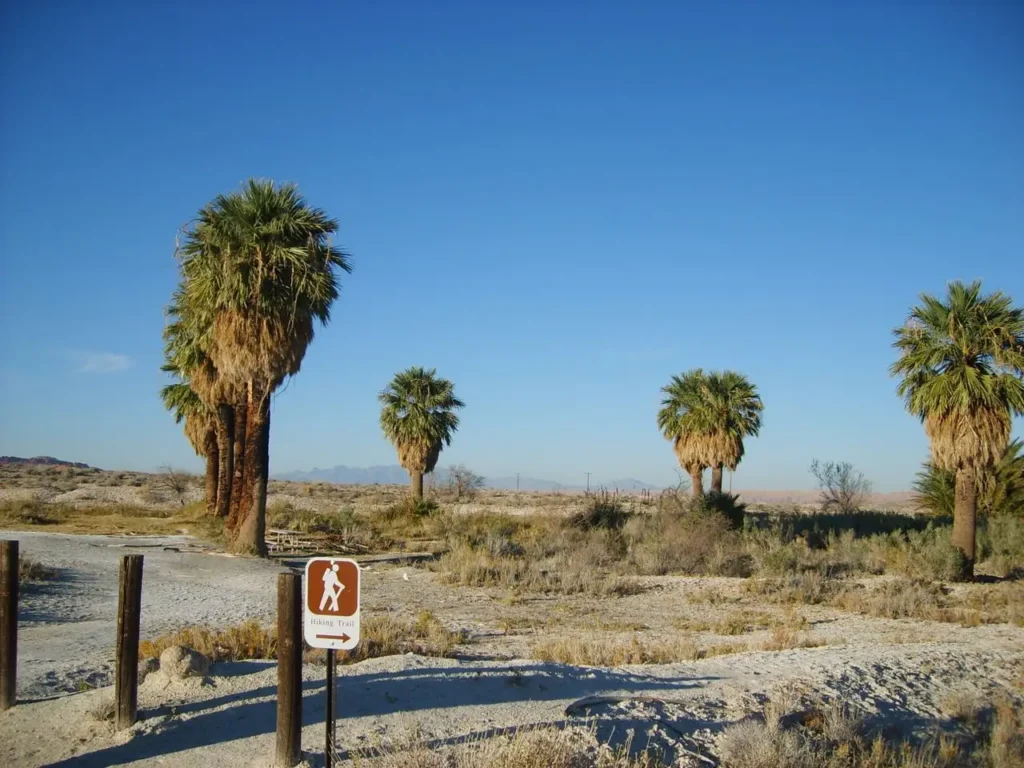
Ajo sits in the Sonoran Desert 130 miles southwest of Tucson, deep in Organ Pipe Cactus country, and most people have never heard of it. This former copper mining town has a Spanish Colonial Revival downtown, a genuine town plaza with an arched arcade, a historic church, and a community square, that looks like it belongs in Oaxaca rather than Arizona.
The International Sonoran Desert Alliance has led an arts and cultural revitalization here over the past decade, converting historic properties into affordable studio and gallery spaces for artists.
The result is a small, genuine arts community that functions very similarly to what Bisbee was in the 1960s before it became widely known.
Organ Pipe Cactus National Monument, which shares the border with Ajo, is one of the most beautiful and least-visited national monuments in the desert Southwest.
The Ajo Mountain Drive loop is a 21-mile scenic drive through stands of organ pipe, saguaro, and cholla cactus that is stunning from November through March.
14. Clifton, Arizona’s Forgotten Copper Giant
Clifton is one of those places that most Arizonans have never visited despite its extraordinary history. Built into a canyon along the San Francisco River in eastern Arizona, Clifton was a major copper mining and smelting center from the 1870s through the late 20th century.
The historic downtown, strung along a single canyon road with Victorian commercial buildings pressed against the canyon wall, has an architectural drama unlike any other town in the state.
The Clifton Jail, carved directly into a cliff face in 1881, is the most unusual historic site in the state. The Clifton Hotel, built into the canyon wall, has been partially restored. The whole downtown feels like a discovery.
Road trip pairing: Clifton pairs naturally with neighboring Morenci, where one of the largest open-pit copper mines in North America is still operating, a jaw-dropping industrial landscape that Phelps Dodge and its successor Freeport-McMoRan built over 150 years.
15. Douglas, Arizona’s Border Town With a Grand Hotel

Douglas sits directly on the US-Mexico border opposite Agua Prieta, Sonora, and is one of the most overlooked historic towns in the state. The Gadsden Hotel, built in 1907 and expanded in 1929, is the anchor: a grand Beaux-Arts lobby with a marble staircase, Tiffany stained glass, and the ambition of a much larger city.
It has hosted Pancho Villa (the notorious lobby pillar he allegedly rode his horse into is documented) and countless Arizona dignitaries.
Douglas’s agricultural hinterland, the Sulphur Springs Valley, is one of the most important sandhill crane and raptors viewing areas in North America during winter migration, drawing serious birders from across the country.
How to Build an Arizona Small Towns Road Trip
The best approach to Arizona’s small towns is a loop rather than an out-and-back. Here are three recommended circuits:
Southern Arizona Loop (4–5 days from Tucson): Tucson → Bisbee (2 nights) → Tombstone (half day) → Sonoita/Elgin wine tasting → Patagonia (overnight) → Tubac (morning galleries) → back to Tucson.
Central Arizona Vertical Loop (3–4 days from Phoenix): Phoenix → Wickenburg (half day) → Prescott (overnight) → Jerome (overnight) → Sedona (optional night) → back to Phoenix via I-17.
Route 66 Western Corridor (2–3 days): Flagstaff → Williams → Winslow (La Posada overnight) → Oatman → Kingman.
Practical Travel Tips for Arizona Small Towns
Elevation matters: Bisbee, Jerome, Prescott, and Williams all sit above 5,000 feet. Temperatures are 10–20°F cooler than Phoenix year-round, and summer thunderstorms are common July through September. Pack a layer even in summer.
Cell service is patchy: In Ajo, Clifton, and Douglas especially, you may have limited or no cell service. Download offline maps before you go.
Reservations matter more than you expect: At Café Roka in Bisbee, La Posada in Winslow, and the Queen Mine Tour, advance booking is not optional on weekends. Plan ahead.
Cash is useful: Several small-town restaurants and galleries are cash-only or prefer cash. An ATM run before leaving the larger cities is a smart habit.
Fuel up in the last major town: In remote areas like Ajo and Clifton, gas stations exist but selection is limited and prices are higher. Fill up in Tucson, Globe, or Safford respectively.
From Arizona’s desert landscapes to the lush Pacific Northwest, America is full of unforgettable destinations. Continue your journey by exploring these Washington State small towns, where you’ll find historic streets, alpine scenery, coastal escapes, and year-round adventures.
Frequently Asked Questions About Arizona Small Towns
What is the most charming small town in Arizona?
Bisbee consistently earns that designation for its combination of Victorian architecture, art galleries, and authentic community character. Jerome is a close second for its dramatic hilltop setting and wine scene. The “most charming” answer genuinely depends on what you value, Bisbee wins on overall experience depth, but Tubac wins on arts quality per square mile.
What Arizona small towns are best for families with kids?
Tombstone (gunfight reenactments, history), Williams (Grand Canyon Railway, small-town charm), and Bisbee (Queen Mine Tour, staircase streets, unique environment) rank highest for family appeal. The Bisbee Mining & Historical Museum is also surprisingly well-designed for children.
What small towns in Arizona are easy day trips from Phoenix?
Wickenburg (60 miles), Jerome (120 miles, feasible as a long day), and Williams (160 miles) are the most accessible small towns from Phoenix. Prescott, at about 100 miles, is arguably the best Phoenix day trip small town for overall experience quality.
Are Arizona small towns worth visiting in summer?
It depends on elevation. Jerome, Prescott, and Williams at 5,000+ feet are extremely pleasant in summer, cool nights, afternoon monsoon storms, and fewer crowds than in winter. Low-elevation towns like Oatman and Wickenburg are very hot in summer (100°F+) and better visited October through April.
Which Arizona small town has the best food scene?
Bisbee, for a town of 5,000 people, has a restaurant quality-to-size ratio that should embarrass much larger cities. Café Roka is genuinely excellent. Jerome has strong wine bars. Winslow’s Turquoise Room at La Posada is James Beard-recognized. For pure density of good food, Bisbee wins.
What is the most historic small town in Arizona?
Tubac (founded 1752) is technically the oldest European settlement. Bisbee (1880) and Tombstone (1879) are the most historically significant from the American frontier era. Jerome has the most dramatically preserved historic architecture. Each “most historic” designation depends on which chapter of history you find most compelling.
Start Planning Your Arizona Small Town Adventure
Arizona’s small towns are not a consolation prize for travelers who couldn’t get Grand Canyon permits. They are the other Arizona, the lived-in, locally made, genuinely surprising version that reveals itself slowly to those willing to leave the interstate.
Bisbee is the best starting point for most travelers. It has the infrastructure, the depth of experience, and the character to anchor a trip of any length. But once you’ve been to Bisbee, the pull of Jerome, Patagonia, and the rest of the Arizona small-town map tends to become self-reinforcing.
Ready to go deeper? Read our complete guide to Bisbee, Arizona’s most rewarding small town, or explore the full Arizona Hidden Gems road trip map to start building your itinerary.