
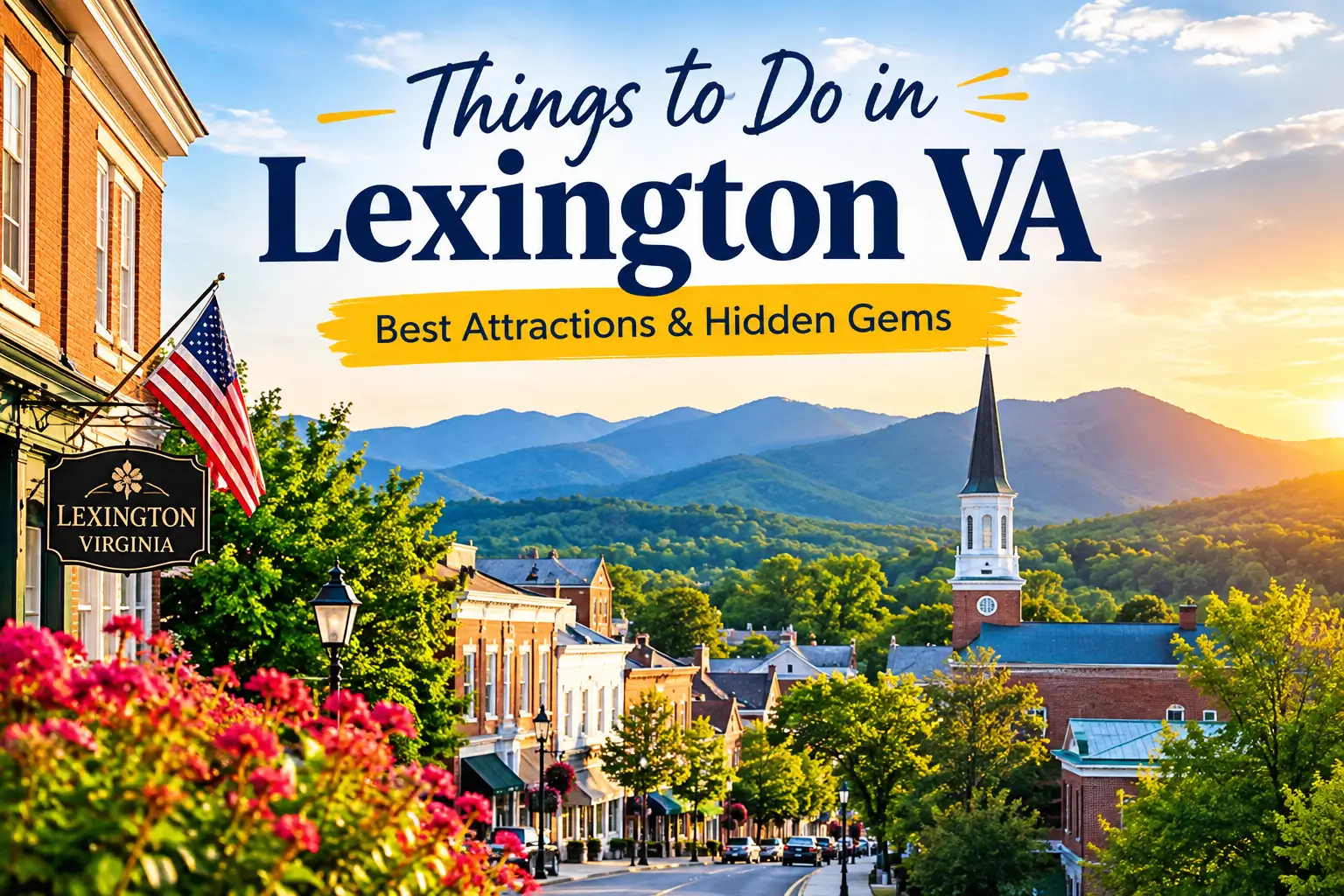
Lexington has a strange kind of gravity for a town of just over 7,000 people. Two nationally significant institutions, Virginia Military Institute and Washington and Lee University, sit directly across the street from each other at its center, and the history layered into both runs deeper than almost anywhere else in the Shenandoah Valley.
Stonewall Jackson taught here before the Civil War. Robert E. Lee spent his final years here after it. George C. Marshall, architect of the plan that rebuilt postwar Europe, graduated from VMI in 1901.
None of that would matter much if the town itself weren’t genuinely pleasant to spend a weekend in, and that’s the part visitors are sometimes surprised by. Lexington’s downtown is walkable, its restaurant scene has real depth for its size, and Natural Bridge, one of the most photographed natural landmarks in Virginia, sits just fifteen minutes south.
This is the complete Things to Do in Lexington VA guide to what’s actually worth your time, from historic landmarks and scenic spots to local places that are easy to miss. If you enjoy discovering hidden gems USA, Lexington has plenty of lesser-known corners that make exploring the town even more rewarding.
Why Lexington Feels Different From Other Virginia History Towns
Most Shenandoah Valley towns pick one identity and commit to it, Staunton leans theatrical and artsy, Luray leans natural-wonder. Lexington runs two parallel identities at once: a serious academic town built around two very different institutions (a state military college and a private liberal arts university), and a serious history town where the 19th century is still physically present in a way that feels lived-in rather than staged.
The two universities sit close enough together that VMI cadets in uniform and W&L students in more typical college dress share the same downtown sidewalks, coffee shops, and bars, an odd but functional coexistence that gives the town a specific texture no other Shenandoah Valley destination has.
Table of Contents
Best Things to Do in Lexington VA
Stonewall Jackson House
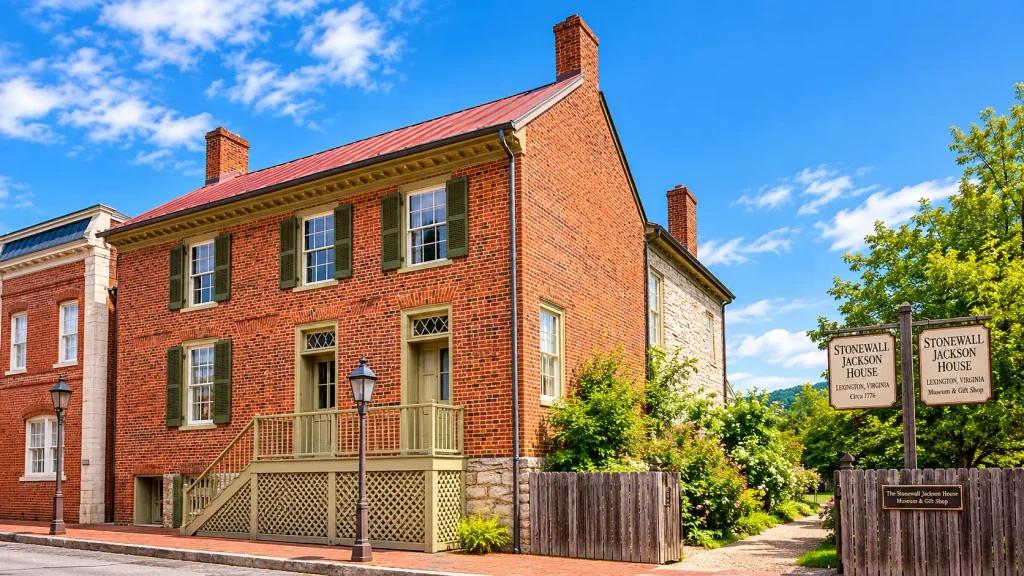
At 8 East Washington Street in the heart of the historic district, this is the actual home where Thomas “Stonewall” Jackson lived from 1858 to 1861 while teaching at VMI, before he rode off to become one of the Confederacy’s most consequential generals.
It’s the only house Jackson ever owned, and it has operated as a museum since 1954, restored in 1979 to its appearance during the Jackson family’s occupancy.
The self-guided tour includes video content on the daily life of Thomas and Anna Jackson, an exhibit gallery with more than 60 artifacts that belonged to the family, and a restored kitchen garden that reflects Jackson’s own documented interest in gardening as both a practical necessity and a genuine hobby.
Open daily, 9am to 5pm, closed January and February and on Easter, Thanksgiving, and Christmas. Residents of Lexington, Buena Vista, and Rockbridge County receive free admission. Combination tickets are available that bundle entry with the VMI Museum, and a broader package adds the Virginia Museum of the Civil War as well.
VMI Museum
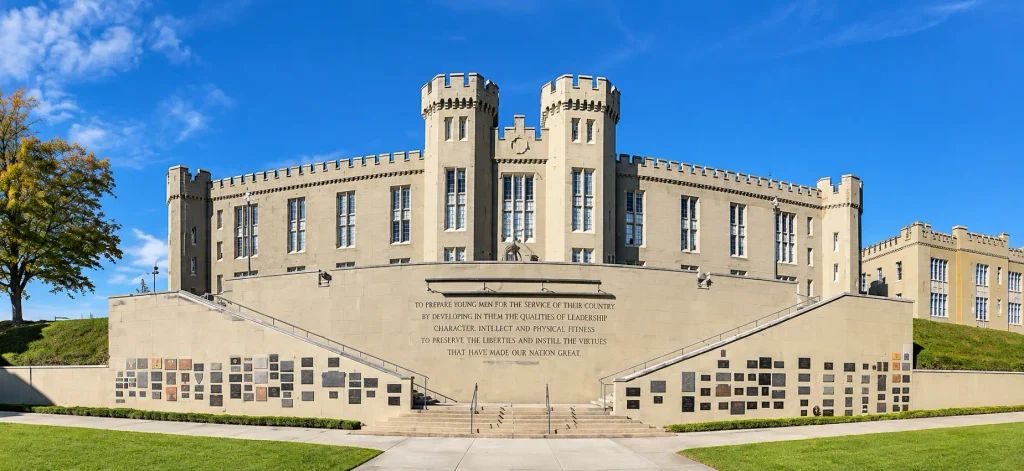
Located on the second floor of Memorial Hall at 415 Letcher Avenue, the VMI Museum tells the story of the nation’s first state-sponsored military college through a 20,000-artifact collection. The single most-viewed object is the mounted hide of Little Sorrel, Stonewall Jackson’s favorite horse, a genuinely strange and memorable thing to see in person.
Seven Medals of Honor awarded to VMI alumni are displayed alongside a dedicated section on George C. Marshall (VMI Class of 1901), and the Stewart Firearms Collection rounds out the permanent exhibits.
Open daily, 9am to 5pm, closed Thanksgiving and during a winter furlough period in early December. Adult admission runs around $8, with reduced rates for seniors, youth, and retired military.
A free cadet-led walking tour of the historic VMI post departs daily at 12:15pm from the museum lobby whenever classes are in session, running about 45 minutes, genuinely worth timing your museum visit around if you want the fuller campus context.
University Chapel (Formerly Lee Chapel)
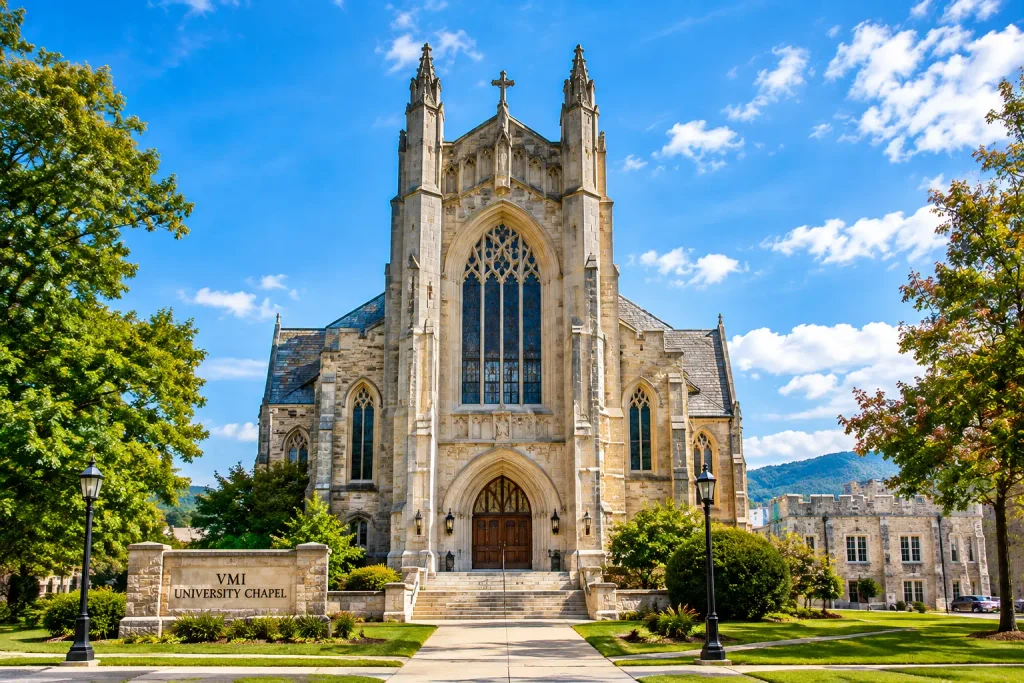
Note before you visit: this building was known as Lee Chapel for most of its history, and you’ll still see that name used across older guidebooks, travel sites, and even some current road-trip blogs. In 2021, the Washington and Lee University Board of Trustees officially renamed it University Chapel, restoring its original 19th-century name of College Chapel. Both names refer to the same building.
Robert E. Lee is entombed in a crypt beneath the chapel, beneath a well-known recumbent marble statue of him, while his horse Traveller is buried just outside. Lee served as president of what was then Washington College from 1865 until his death in 1870, and his preserved office is part of the visitor experience inside.
A museum in the chapel’s basement covers the history of the Washington and Lee families alongside the university’s own institutional history. The building draws upwards of 40,000 visitors a year and anchors the Washington and Lee University Historic District, a National Historic Landmark.
While you’re on campus, the Reeves Museum of Ceramics, housing the fourth-largest ceramics collection in the United States, is an unexpected and worthwhile stop most visitors don’t know to look for.
George C. Marshall Museum
On the VMI campus, this museum is dedicated to Marshall’s full career: VMI cadet, World War II Army Chief of Staff, Secretary of State, and the only professional soldier ever awarded the Nobel Peace Prize, for the European recovery plan that bears his name.
Open Tuesday through Saturday, 11am to 4pm, with adult admission around $5. Smaller and more specific than the VMI Museum, but worth the hour if Marshall’s career interests you at all.
Downtown Walking and Gallery Row
Lexington’s compact historic downtown, centered on Main Street and Washington Street, rewards an unhurried walk more than a checklist approach. Gallery Row along Washington Street clusters several working galleries, Artists in Cahoots, Cabell Gallery, Earth Fire Spirit, and Nelson Gallery among them, in a few walkable blocks, giving the town a genuine art-buying dimension beyond its history and academic identity.
The Lexington Visitor Center at 106 East Washington Street is a useful first stop for current event listings and a printed downtown map.
Hull’s Drive-In
A community-run, nonprofit drive-in movie theater a short drive north of downtown, operating seasonally. It’s the kind of unpretentious, genuinely local experience that works especially well on a warm evening as a low-key alternative to a second museum visit, bring a blanket and something to sit on.
Natural Bridge State Park
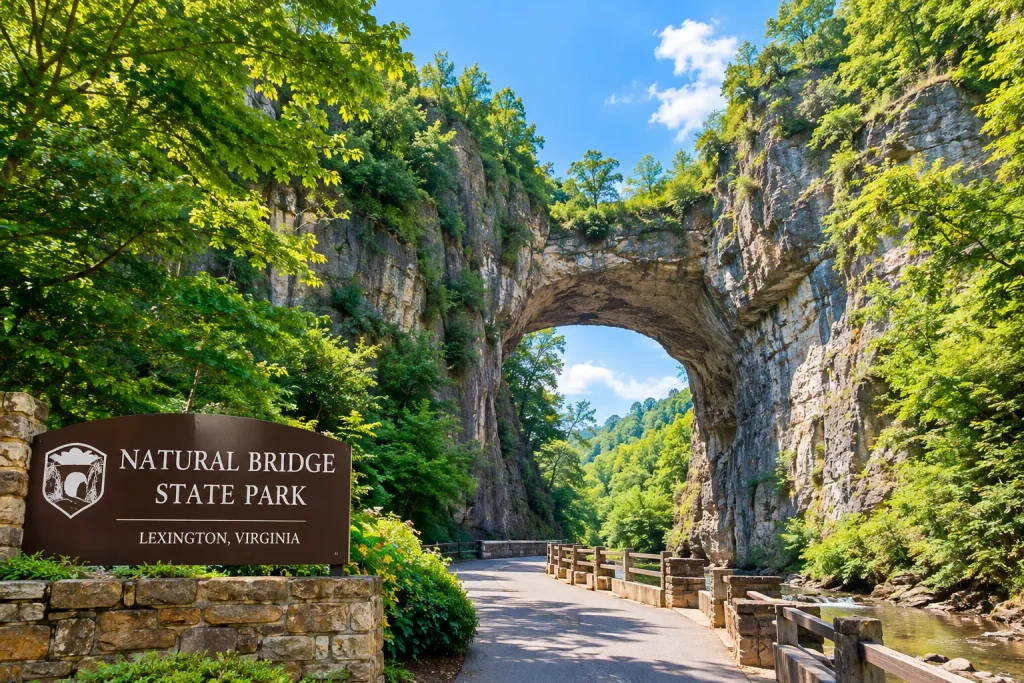
Fifteen minutes south of downtown Lexington, Natural Bridge is a roughly 200-foot limestone arch spanning Cedar Creek, historically owned by Thomas Jefferson and included on numerous 19th and early 20th-century lists of natural wonders.
It became a Virginia state park in 2016, and the 1,540-acre property now includes a visitor center, hiking trails, a disc golf course, group campsites, and Dark Sky Park astronomy programming given the area’s minimal light pollution.
The Cedar Creek Trail is flat, follows the creek, and delivers the classic approach view of the bridge from below, the easiest and most rewarding trail in the park for visitors without a lot of hiking time. The Caverns at Natural Bridge, a separate attraction nearby, offer an underground counterpoint if you want to extend the visit.
One correction worth knowing before you go: Foamhenge, the foam Stonehenge replica once located on this same stretch of highway, is not here anymore. It relocated to Cox Farms in Centreville, Virginia back in 2017, and several travel sites still list it under Natural Bridge out of outdated habit. Don’t build a visit around it expecting to find it here.
Virginia Horse Center
A major equestrian events venue a few miles from downtown, hosting horse shows, competitions, and clinics throughout the year as part of Virginia’s substantial equine economy. Worth checking the events calendar before your visit, an active show weekend adds genuine spectacle even for visitors with no particular equestrian interest.
Where to Eat in Lexington VA
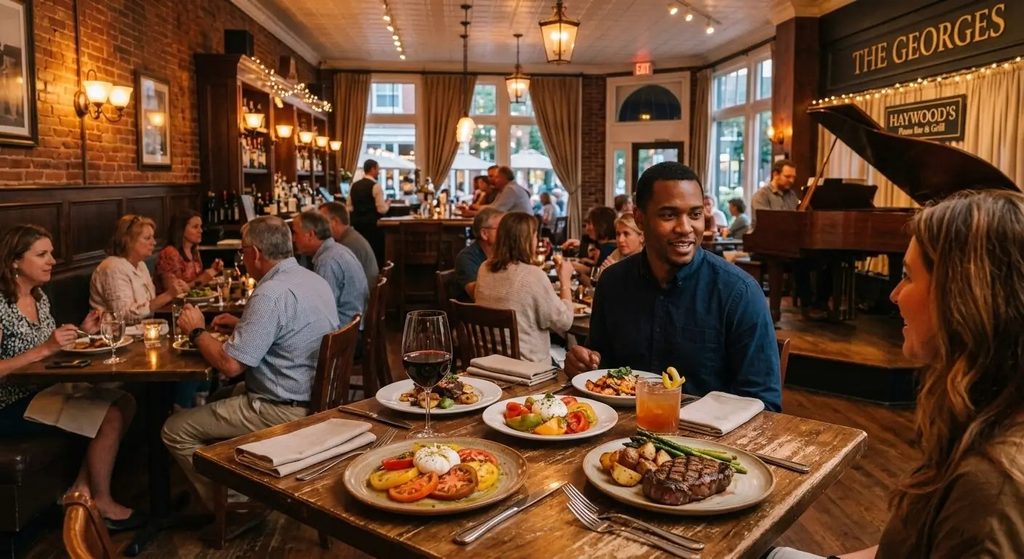
Haywood’s, at The Georges on North Main Street, is the town’s most polished dining option, locally sourced, chef-driven seasonal cuisine, a curated wine list, and live piano jazz in a genuinely sophisticated but unstuffy dining room. Dinner runs Wednesday through Sunday, with a well-regarded weekend brunch. The co-located TAPS bar works well for a pre-dinner drink.
Southern Inn Restaurant and Bistro on Main are the two most consistently recommended mid-range options downtown, both drawing repeat local business rather than just tourist traffic.
For casual and craft-beer-focused dining, Brew Ridge Taps (part of the broader Shenandoah Valley Beerwerks Trail), Heliotrope Brewpub with its large outdoor seating and artisan pizza, and Hardens, a family-owned elevated gastropub, cover the pub end of the spectrum well.
NapaThai Cuisine handles Thai food downtown with a loyal following, and GloBowl Cafe is the reliable stop for vegan and vegetarian travelers.
For breakfast, Blue Sky Bakery and Legendary Eats (authentic New York-style bagels) are the two names locals point to first.
Where to Stay in Lexington VA
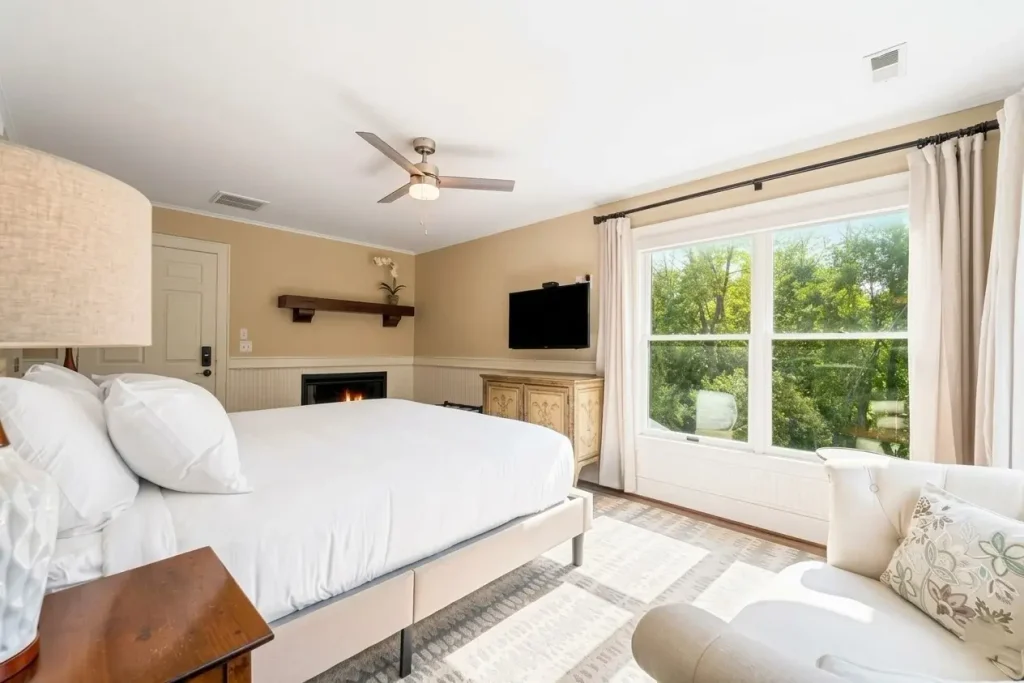
The Georges, a boutique hotel group occupying several connected historic downtown buildings (the Washington Building, the Marshall Building, Lawyer’s Row, and The Livery), is the most atmospheric lodging option and puts you directly above Haywood’s restaurant.
Inn at Brierley Hill is the standout bed-and-breakfast option, set in the Blue Ridge foothills just outside town.
Standard chain hotels, Hampton Inn Lexington-Historic District, Wingate by Wyndham, Holiday Inn Express, and several others, cluster along the town’s main approach roads for travelers who prioritize predictability and price over character.
If you’re extending your visit to Natural Bridge, the Natural Bridge Historic Hotel sits directly across from the state park entrance and works well as an alternative base, particularly if stargazing at the Dark Sky Park is part of your plan.
Combining Lexington With Staunton
Lexington sits 36 miles south of Staunton, about 43 minutes via I-81, making the two towns a natural pairing for anyone building a longer Shenandoah Valley trip.
They complement rather than duplicate each other: Staunton for theatre, Victorian architecture, and a livelier restaurant and arts scene; Lexington for concentrated Civil War and military history and a quieter, more academic small-town feel.
Most visitors doing both use Staunton as the base with more accommodation variety and treat Lexington as a full-day trip, though Lexington’s own lodging is more than adequate for an overnight stay if the history is the priority.
If you’re exploring Virginia beyond the usual destinations, check out our guide to the Best Things to Do in Staunton VA and discover more charming destinations in our list of the Best Small Towns in Virginia.
Getting to Lexington VA
Lexington sits on I-81 in Rockbridge County. From Staunton, it’s 36 miles (about 43 minutes) south. From Roanoke, it’s roughly 45 minutes. From Washington DC, expect around 3 hours via I-66 and I-81. From Richmond, approximately 2 hours via I-64 and I-81.
Best Time to Visit Lexington VA
Spring and fall offer the most comfortable temperatures and align with both universities’ academic calendars, which brings more energy to the downtown restaurant and bar scene. Fall specifically pairs well with foliage season on the nearby Blue Ridge Parkway.
Summer is quieter on campus (both schools are largely out of session) but keeps Natural Bridge’s hiking trails and the Dark Sky Park programming fully active. Winter is the slowest season, some university-adjacent business hours shorten, and the VMI Museum closes for a furlough period in early December, so check specific hours before a winter visit.
Frequently Asked Questions
Is Lexington, VA worth visiting?
Yes, Lexington, Virginia, is well worth visiting particularly for travelers with any interest in Civil War history, military history, or a walkable small college town. The concentration of significant historic sites within a few downtown blocks is unusual even by Virginia standards.
What are fun things to do in Lexington?
Lexington, Kentucky is known for its legendary horse farms, historic sites, and lively downtown distillery district, making it a great destination for history, bourbon, and horse-racing enthusiasts.
Is Lexington, Virginia liberal or conservative?
Lexington, Virginia tends to lean Democratic in presidential elections, although it is surrounded by a more conservative rural area. In the 2024 presidential election, Lexington City recorded 1,795 votes for Kamala Harris and 1,030 for Donald Trump, with Harris receiving about 62% of the vote.
What is Lexington VA known for?
Being home to both Virginia Military Institute and Washington and Lee University, the preserved home of Stonewall Jackson, the burial site of Robert E. Lee, and its proximity to Natural Bridge State Park.
Is Lexington VA good for a day trip?
Yes. The core historic sites (Stonewall Jackson House, VMI Museum, University Chapel) can be covered comfortably in a single day, with Natural Bridge as a worthwhile half-day addition if time allows.
Plan Your Lexington Visit
Start at the Stonewall Jackson House in the morning while the museum is quiet, walk the few blocks to the VMI Museum and take the 12:15pm cadet-led campus tour if the timing works, then finish at University Chapel before lunch downtown.
That sequence covers Lexington‘s essential history in half a day, leaving the afternoon for Gallery Row, Natural Bridge, or simply a slower walk through a town that rewards not rushing.